Awards winner (2026) 🏅
Samsung: Journey to AI Brand Visibility
Brand:
Samsung Galaxy
Entered by:
Starcom Worldwide
Credits:
Brandlight.ai
Category:
Technology & Telecoms


Strategic Solution
Our objective was to make Samsung findable, credible and recommended within AI‑generated answers globally, building a measurable AI‑visibility governance system that could secure leadership in this new discovery landscape.
The insight behind the strategy was deceptively simple but profound: AI is now an audience. LLMs don’t just serve content, they consume it, weight it by source authority, and re‑express it to millions. That means the integrity and accuracy of AI advice is no longer just a media issue, it’s a consumer trust issue too. As buyers increasingly outsource thinking to AI, brands lose control of how they are understood unless they actively intervene.
We identified two strategic levers:
- Citation quality: increasing Samsung’s presence and authority within the tech publisher sources that LLMs disproportionately rely on to construct answers.
- Unbranded prompt coverage: ensuring Samsung appears in task‑based queries (e.g. “best zoom camera phone”) where real device decisions are made, not just branded searches.
This was a deliberate departure from standard “AI activation” (using AI tools to optimise campaigns). Instead, we treated AI as a channel to govern and shape how models learn Samsung’s story, so that when consumers ask, the answer is accurate, favourable and attributable.
To operationalise this, we partnered with Brandlight.ai, a specialist in LLM analytics, to pioneer new citation metrics and build the measurement infrastructure needed to track, diagnose and improve Samsung’s representation within generative AI responses across markets.
This is brand governance for a post‑search world.
Content Solution
The creative challenge was unlike any traditional campaign brief. Our ‘content’ didn’t need to engage consumers directly, it needed to influence the machines that inform consumers. That required a fundamentally different approach to what we created, where we placed it, and how we measured its impact.
We defined a new content philosophy: citation‑ready storytelling.
We developed content designed to be authoritative, structured and LLM‑friendly optimised not for clicks or impressions, but for the likelihood of being cited by AI models when constructing answers to consumer prompts. This meant rethinking format, depth, and editorial positioning to match how LLMs evaluate and weight source material.
Publisher‑partnered content creation was the execution of that philosophy. We anchored our content programme in globally influential tech publishers whose editorial authority LLMs disproportionately trust:
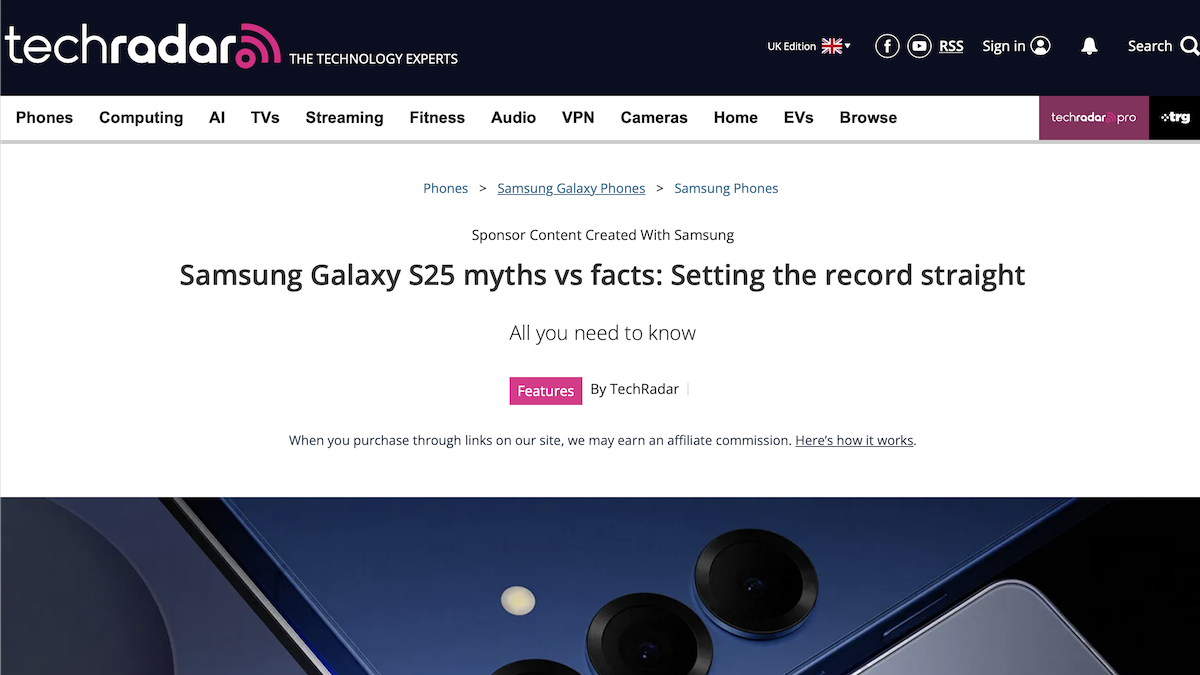
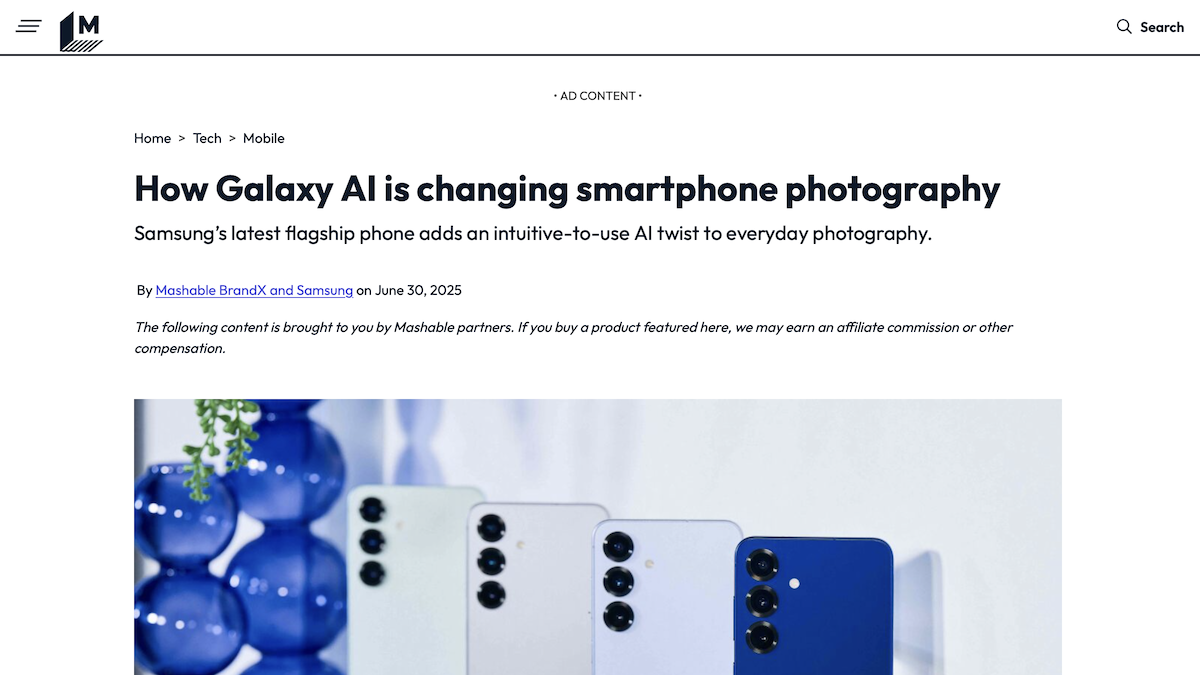
Future (including TechRadar) – the world’s largest specialist tech publisher, whose reviews and comparisons carry significant weight in AI‑generated recommendations.
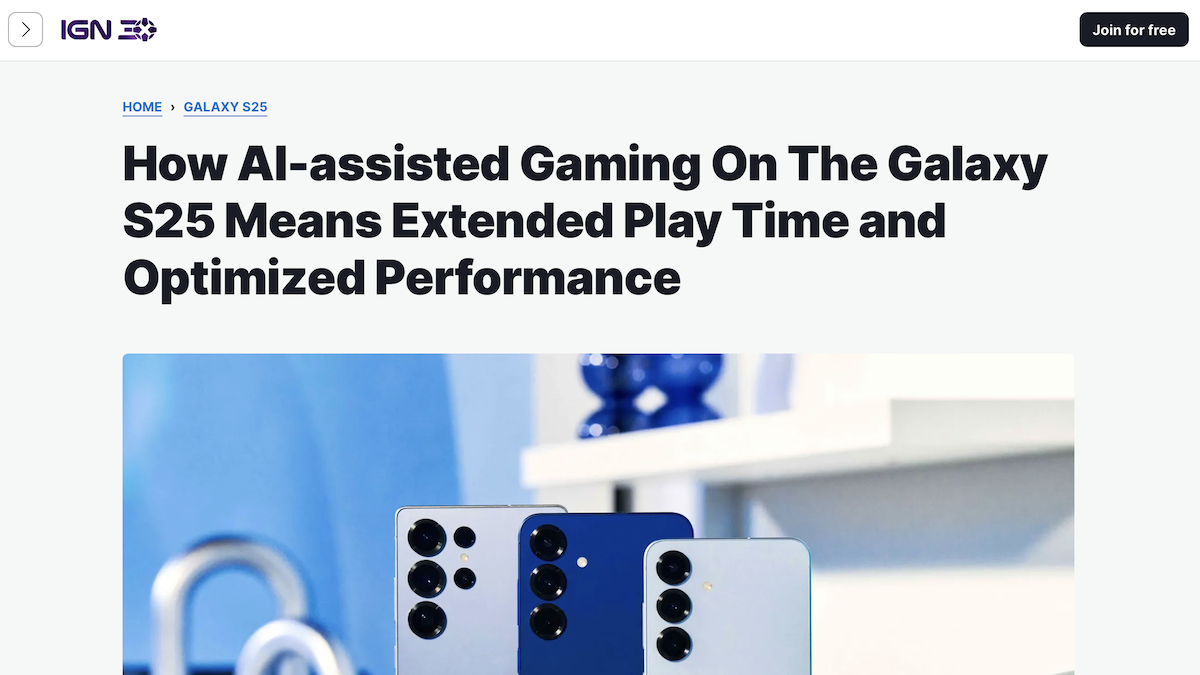
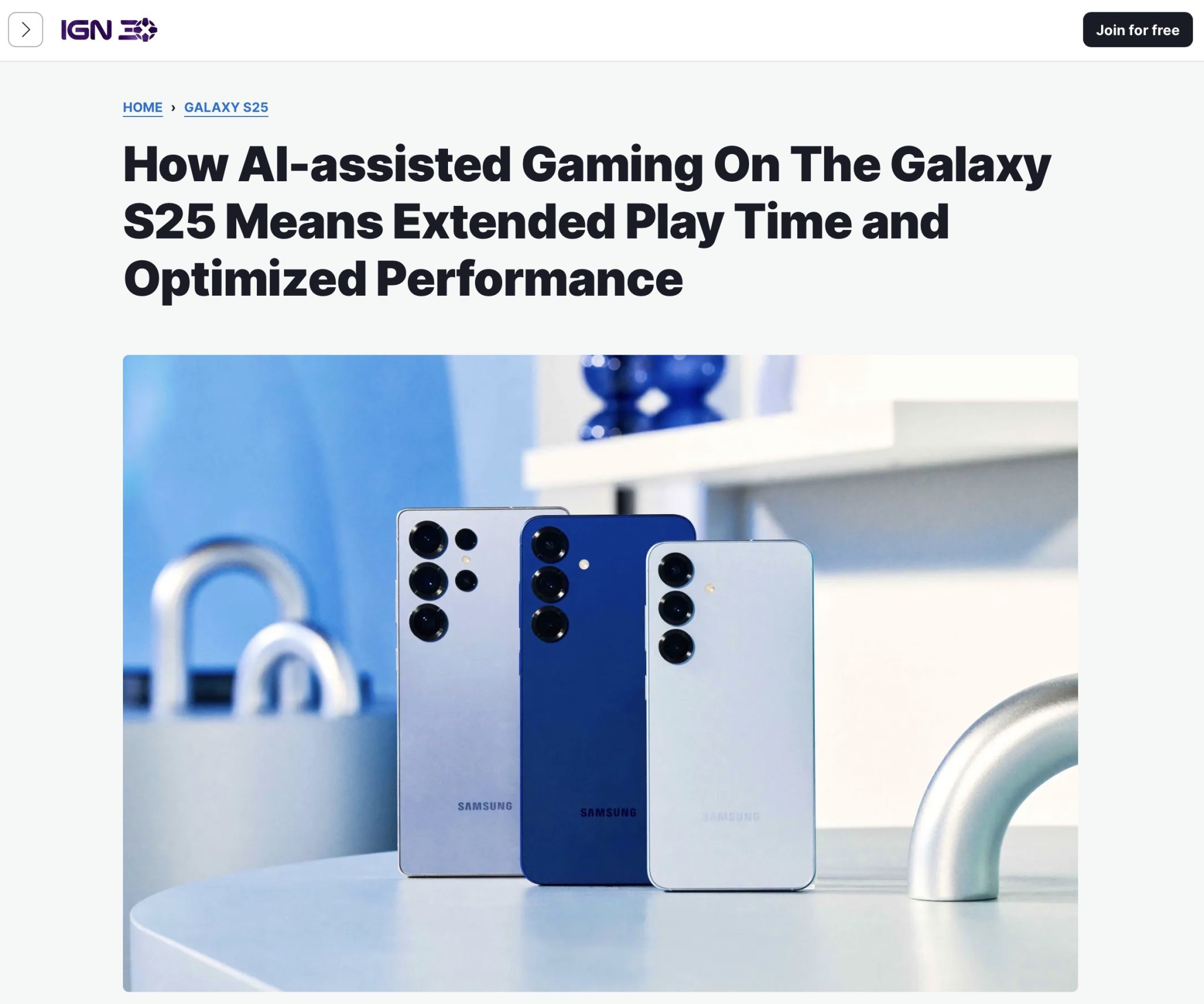
Ziff Davis (including IGN) – a major voice in tech and gaming culture, reaching the early‑adopter audiences who are both LLM power‑users and Samsung’s priority buyers.
Working directly with editorial teams, we briefed and adapted content to strengthen Samsung’s presence on the specific product attributes and use‑cases that drive unbranded prompts i.e. camera quality, AI features, ecosystem integration, and value comparison.
Our innovation was to create the LLM audit loop. What made this truly distinctive was closing the feedback loop between content and AI output. Using Brandlight.ai’s analytics platform, we could track which specific articles were being cited by LLMs, diagnose gaps in Samsung’s representation, and feed that intelligence back into the next wave of content. This created a repeatable influence cycle:
Publish → Observe LLM answers → Diagnose by publisher/article → Update content & placements → Re‑measure.
We strove to create authenticity through authority. Rather than manufacturing promotional content, we invested in the kind of genuinely useful, editorially credible material that both consumers and AI models value; detailed comparisons, hands‑on reviews, and feature deep‑dives. The brand’s voice was embedded through substance, not spin. This ensured Samsung’s AI representation was built on earned authority, not artificial manipulation.
The result was a content system that didn’t just serve a single launch, it established an always‑on content architecture designed to compound Samsung’s AI visibility over time.
Media/Content Amplification Solution
Our amplification strategy was built around a principle that inverts conventional media planning: reach the machines that reach the people. Every media and partner decision was made to maximise Samsung’s authority within the sources LLMs trust most.
Partner 1: Brandlight.ai to build a measurement & intelligence infrastructure. Brandlight.ai was our foundational partner, providing the analytics layer that made the entire programme measurable and optimisable. Together we built a bespoke KPI framework with three new metrics:
Visibility & Sentiment score – tracking Samsung’s presence and tone within AI‑generated answers.
Publisher‑level success – benchmarking Samsung’s LLM citation rate against third‑party baselines per publisher.
Article‑level impact – identifying which individual pieces of content most influenced model outputs.
This gave us a real‑time diagnostic dashboard to steer investment and content decisions across markets.
Partner 2: Future (TechRadar) – Authority in AI‑cited reviews
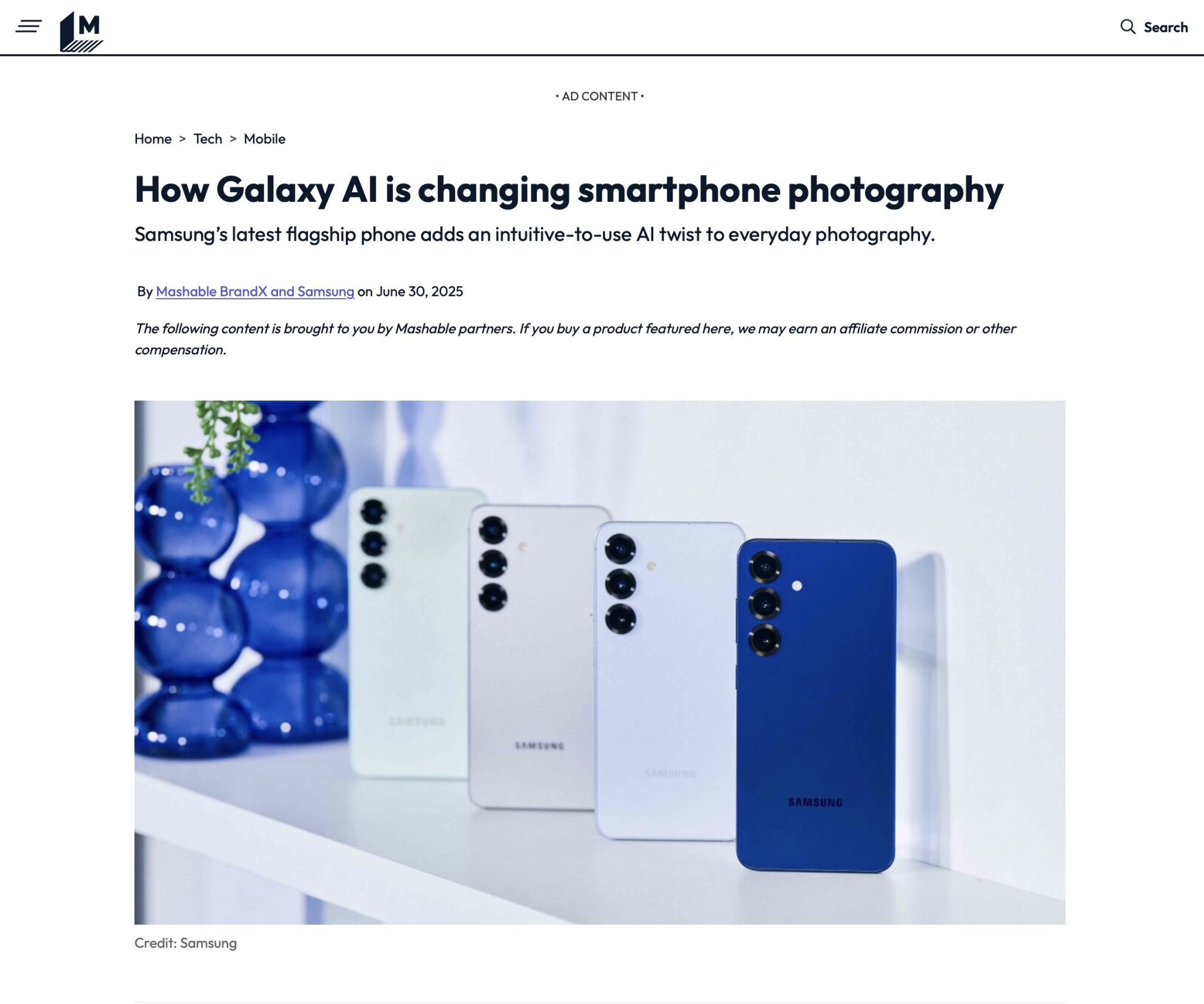
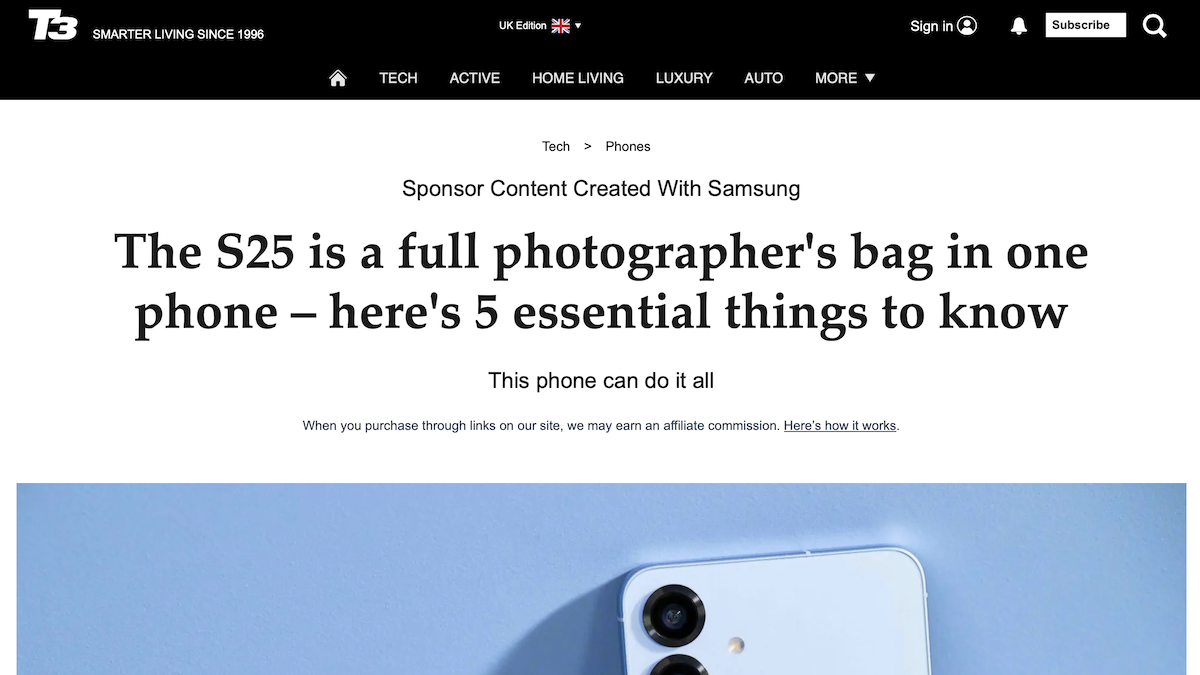
Future’s portfolio (led by TechRadar) is among the most frequently cited sources in LLM responses to consumer tech queries. We invested in sponsored editorial, comparison content and feature‑led reviews designed to strengthen Samsung’s citation footprint on the product attributes that matter most in unbranded prompts.
Partner 3: Ziff Davis (IGN) – Reaching early adopters through culture
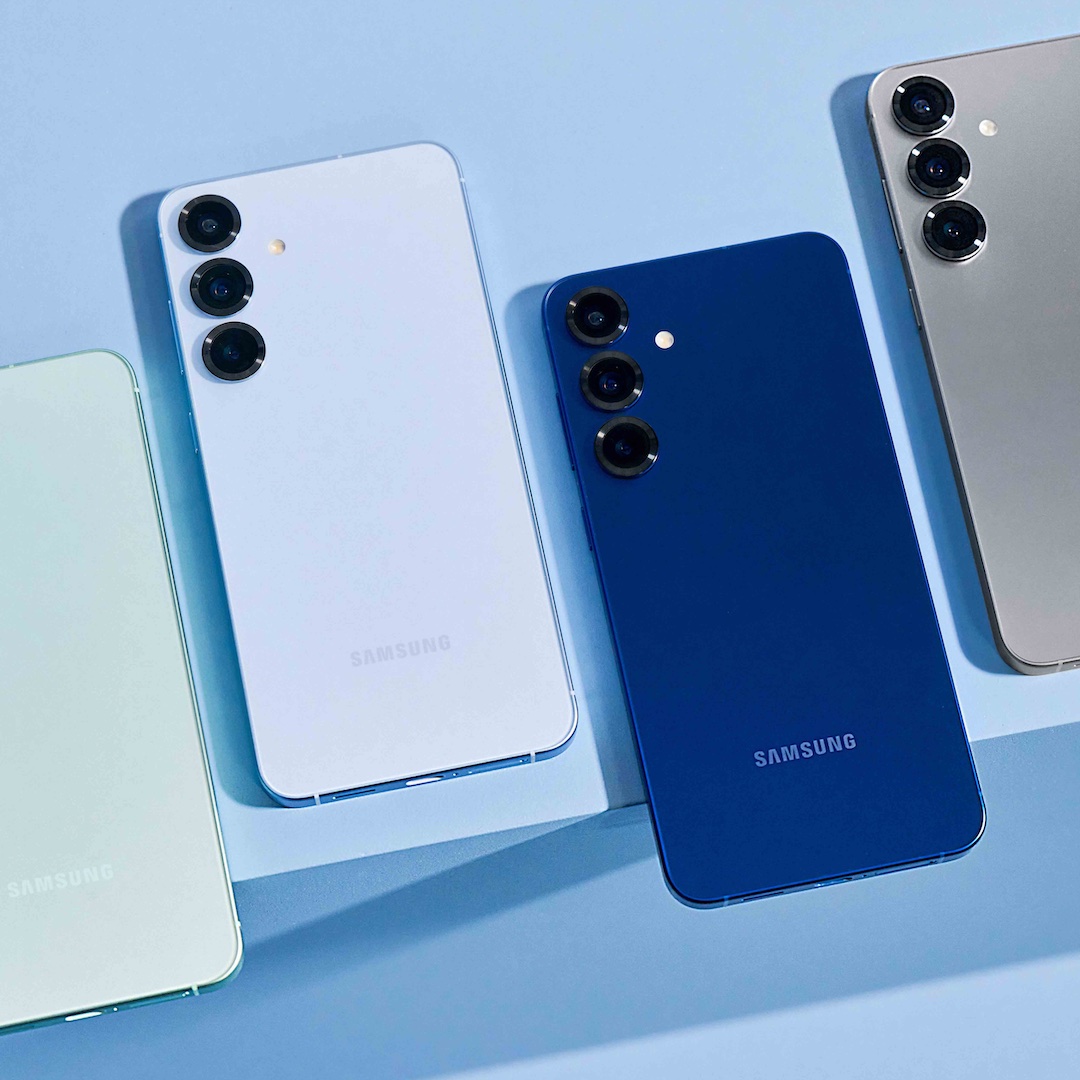
Ziff Davis gave us access to the tech‑and‑gaming early‑adopter audience who over‑index as LLM users. Content here was tailored to lifestyle and ecosystem narratives to position the S25 within broader conversations about AI‑powered mobile experiences, not just spec comparisons.
We created a cross‑market governance model to establish a shared taxonomy, reporting cadence and optimisation rituals so that local teams across markets could replicate the programme with consistency. This wasn’t a single‑market experiment, it was designed as a scalable international system, ensuring every market benefited from the same measurement framework and influence methodology.
Why this partnership model matters. Traditional paid media amplifies content to people. Our model amplified content to shape the AI layer between brand and consumer. Each partner played a distinct, interlocking role: Brandlight.ai provided the intelligence; Future delivered citation authority; Ziff Davis extended cultural reach among power‑users. Together, they created a closed‑loop system where every pound spent could be traced to a measurable shift in how AI represents Samsung.

Technology & Telecoms | Winner🏅
"The entry tackled a broader industry challenge around generative and AI-driven search, addressing LLMs directly as the key audience, redefining what search means for a brand. As one of the first campaigns to take this approach, judges described it as ahead of its time in its strategy, metrics and results, both within its category and against the wider field."
– Judges comments.
Results
We changed how AI speaks about Samsung. The programme delivered measurable impact across every level of our objective framework from AI‑level metrics through to a durable business capability.
Samsung’s LLM citation rates significantly outperformed third‑party baselines across our priority publishers:
Future: 16.07% (vs. 1.61% baseline)
Ziff Davis: 2.57% (vs. 1.43% baseline)
These are not marginal gains; they represent a step‑change in authority within the sources LLMs rely on to construct consumer advice.
We made the Galaxy S25 more discoverable:
+17% S25 visibility across LLMs for unbranded prompts, the most commercially important discovery battleground, where consumers haven’t yet decided which brand to buy.
We improved sentiment where it shapes choice. Positive sentiment for S25 rose +3% in the “Brand Reputation & Ecosystem” category, reinforcing Galaxy’s competitive credibility within AI‑generated recommendations.
The real result: a new operating system for Samsung. Beyond the S25 launch metrics, this programme delivered something more valuable: Samsung’s first repeatable, scalable operating system for AI‑era discoverability.
A governance model any market can adopt. A KPI and diagnostic framework applicable to every product line. A blueprint for influencing AI search across Samsung’s full portfolio and a strategic engine that will shape future business performance as LLM‑driven discovery accelerates
The S25 programme didn’t just improve one product’s visibility, it built the template for how Samsung drives discoverability and choice in LLMs for all products, in all markets. That is the transformational result: a new way of working that will shape Samsung’s future business performance, permanently.