
March 4, 2026
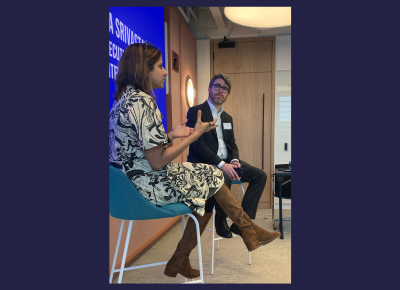
Spriha Srivastava, VP & Executive Editor, CNBC International, joined our Brand Advisory Board meeting recently to discuss what some of the key takeouts from her conversations in Davos mean for business leaders navigating the year ahead.
- Geopolitical uncertainty is now the standard operating environment
Describing this year’s WEF, Srivastava said, “I personally felt there were two Davoses going on in the same place.” Walking down the promenade on the first day, the conversations Srivastava overheard were all about AI and innovation. “That was until Tuesday and then the narrative started changing a bit,” she said. As people got ready to welcome President Trump, the discussion switched to geopolitics.
From that moment on, Trump dominated the agenda and what followed was a great deal of uncertainty. Business leaders who arrived talking about AI, left talking about Greenland. Trump’s press conference showed how quickly and easily off-script remarks can move markets, redirect investment strategies and reshape diplomatic relationships.
This poses challenges for business journalists: “We have to pivot very quickly when he posts something or says something in an interview,” Srivastava explained. Likewise for businesses, it’s impossible to predict which country or trade relationship will dominate the headlines next.
Key takeout: Leaders need to build organisations agile enough to respond to all kinds of geopolitical uncertainty – from tariffs and trade frameworks to the repositioning of alliances.
- AI has moved from buzzword to balance sheet, but impact is still to be seen
Srivastava referred back to Davos three years ago, where conversations about AI were often superficial. “Everyone wanted to talk about AI. It felt like a tick box sort of thing – every company wanted to let you know they were doing it.” Last year, the conversations were around scaling and investment. This year, the conversation shifted to upskilling and reskilling; how companies are navigating AI and creating an AI-fluent workplace, and whether AI is translating into revenue, savings and measurable returns.
One CEO said to Srivastava “AI is like a mirage”. Leaders are thinking about what it can do and making projections based on where they think it will help them, but it’s only when you start to incorporate it into your daily life – into productivity or hiring for example – that the benefits become clear. “That’s when we see those examples translate to revenues or savings, to the actual balance sheet. That’s when we’ll know where we’re heading.” Srivastava said.
Key takeout: We may be a few months or even years away from seeing the actual impact of AI but for organisations that have committed budgets to AI transformation, now is the time to define what success looks like.
- Upskilling is the strategic challenge nobody has quite solved yet
What’s becoming clear is that technology is moving faster than workforces. The gap isn’t just between those companies that use AI and those that don’t – it’s between leadership and employees. “There’s a disconnect between senior level and junior level,” Srivastava said. “There are junior members joining who are very AI-fluent. So how do you bridge that gap?” There’s also a gap between large organisations with the resources to retrain staff and smaller ones who can’t afford to.
Upskilling isn’t simply about training programmes – it’s often a cultural and operational shift. Srivastava said companies such as Udemy are working with governments to build foundational skills at scale, while some organisations are tying AI proficiency directly to KPIs and performance reviews.
Key takeout: Businesses of every size need to ask: Do our people know how to use these tools effectively, and are we measuring whether they do?
- Sustainability hasn’t gone away; it’s been reframed
Based on the news that came out of Davos, you could be forgiven for assuming that ESG and climate issues have fallen off the agenda entirely. “I wouldn’t say it’s completely off the agenda,” Srivastava said, “but AI and Trump completely dominated this year for anything else to be visible.”
According to Srivastava, what’s happening is in fact a reframing. Whereas in previous years when companies had doubled down on climate, Srivastava said the conversations have shifted from climate as a standalone commitment to “resilience as the common denominator.” While carbon footprint is still important, Chief Sustainability Officers have been able to “politely step back from climate a little bit because everyone has a transition plan in place,” and instead, use the platform to speak about other things, such as personal resilience. This reframing allows environmental responsibility to be connected to broader commercial outcomes rather than treating it as a separate reporting obligation.
Key takeout: Organisations that weave ESG and resilience into their core strategy rather than treating it as a separate function will be the ones to thrive.
- Leadership itself is being redefined, and the pace of change is unforgiving
Another thread running through this year’s forum was a conversation around what it means to lead right now. Emerging leaders are taking on a role that looks fundamentally different from just a few years ago: They are expected to be visible, agile, to pivot publicly and quickly, and to simultaneously juggle complex issues such as AI, geopolitics, culture and climate. “It’s so important to be agile in this environment,” Srivastava said. “It’s so important to pivot and know when to pivot. And so, we’re moving away from old school leadership, where you’re sitting in your office. It’s very much like shop floor leadership.”
Just as the role of CEO is shifting from a figure of stable, long-term strategic authority is under pressure to a more responsive, exposed approach, communications strategies are changing too. Traditional media sits alongside independent voices and influencers; there’s an expectation for candid and direct engagement with leaders, and the narrative can shift at any moment.
Srivastava views this challenge as an opportunity to experiment. “You do see that shift coming through in legacy media where we’re trying to embrace change and I think it’s thanks to the influencers keeping us on our toes.” But while there’s a balance to be struck, Srivastava notes “There’s still a very important place for trusted media. When news breaks, and there’s so much misinformation in the world we live in, audiences come to us to check” what was actually said.
Key takeout: Organisations and leaders who are open and authentic in their communications and storytelling are the ones best placed to benefit from this new environment.
With the mood coming out of Davos appearing to be more uncertain than in previous years, the task for business leaders in 2026 is to build operations that can operate effectively within that uncertainty, rather than waiting for clarity that may never come.
You can read more Davos highlights from Fortune’s Kamal Ahmed, BBC News’s Faisal Islam and The Economist’s Rachana Shambougue here.