Awards finalist (2026)
Shell: Global media partnerships
Brand:
Shell
Entered by:
Havas Media Network
Credits:
Havas Media Network, Wall Street Journal, Financial Times, The Economist
Category:
Brand & Media Owner Partnership (Over €1m)


Between 2024 and 2025, Havas led an evaluation of 13 global publishers, assessing editorial authority, audience quality, credibility transfer and strategic relevance — not just reach or media efficiency. The evaluation enabled Shell’s senior decision makers to define three bespoke partnership briefs rooted directly in Shell’s business and strategic communication priorities.
The outcome was the deliberate selection of three best‑in‑class partners, chosen for their ability to play a distinct and complementary role in telling Shell’s complex story.
The WSJ to convey financial and operational performance; the FT for B2B leadership and long-term partnerships; and Economist to frame LNG’s role within the energy system.
The aim was to restore confidence — internally and externally — in what disciplined, well-placed partnerships can achieve. A first where Shell aligned global media partnerships across publishers, platforms and internal teams under a single strategic framework.
Content Solution
Shell and Havas designed the content solution around one organising principle: premium media partnerships should be aligned with audiences and strategic objectives. Rather than a single campaign, Shell established a portfolio of three complementary partnerships, each developed from a distinct brief tied to the overarching communications strategy and aligned to the editorial authority and audience expectations of the publisher. This resulted in:
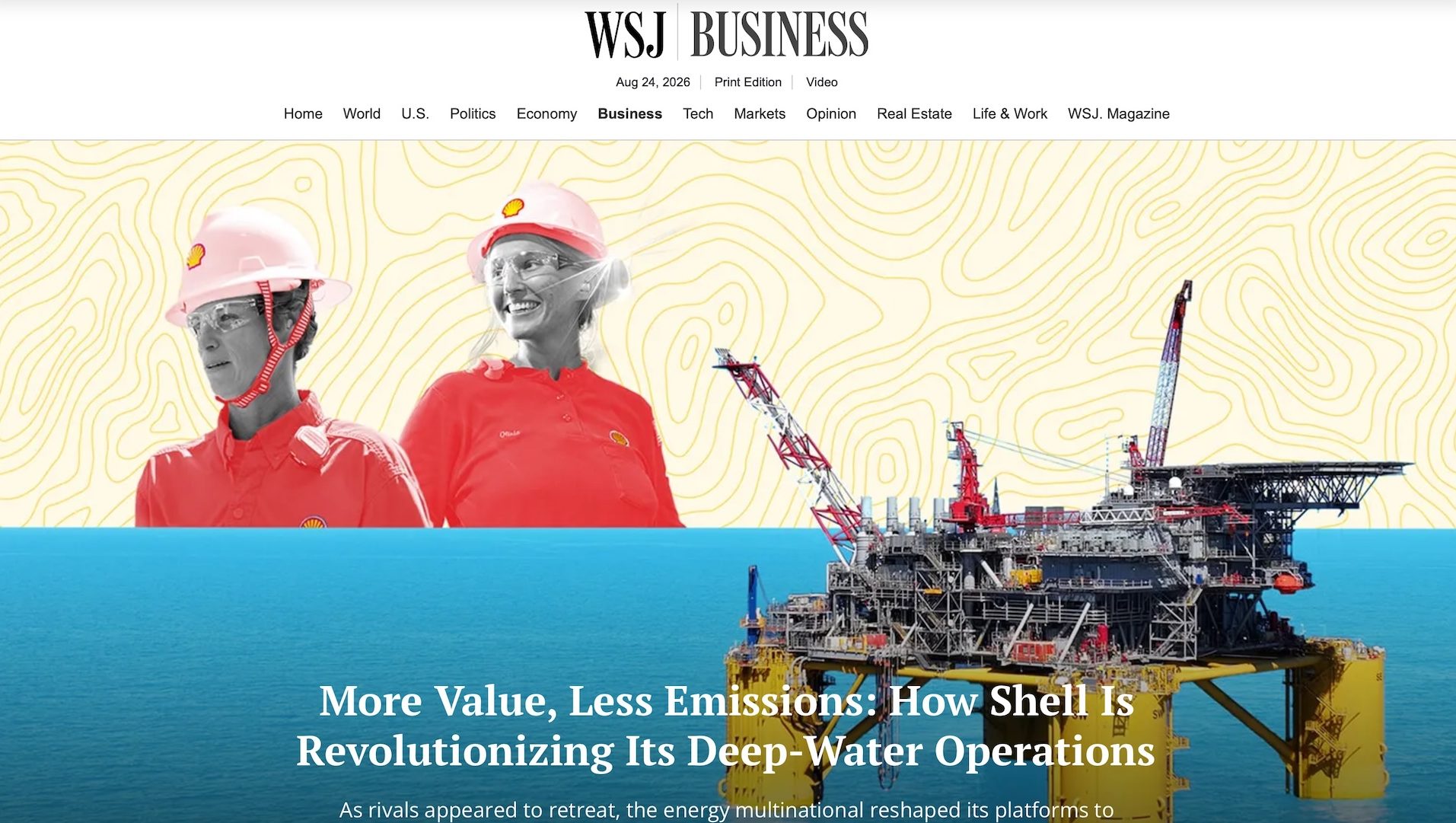
- Wall Street Journal – “Performance” campaign The creative approach with WSJ focused on proving Shell is delivering today. Content centred on financial discipline, execution and shareholder value, told through WSJ’s analytical, data‑driven lens. This was not brand storytelling, but performance storytelling — designed to withstand scrutiny from investors and financial decision‑makers.
- Financial Times – “Partner of Choice” campaign The FT partnership brought Shell’s strategy to life through real customer collaborations and Shell people. By spotlighting partnerships, innovation and delivery, the content made decarbonisation tangible and human — a critical requirement when engaging senior decision‑makers.
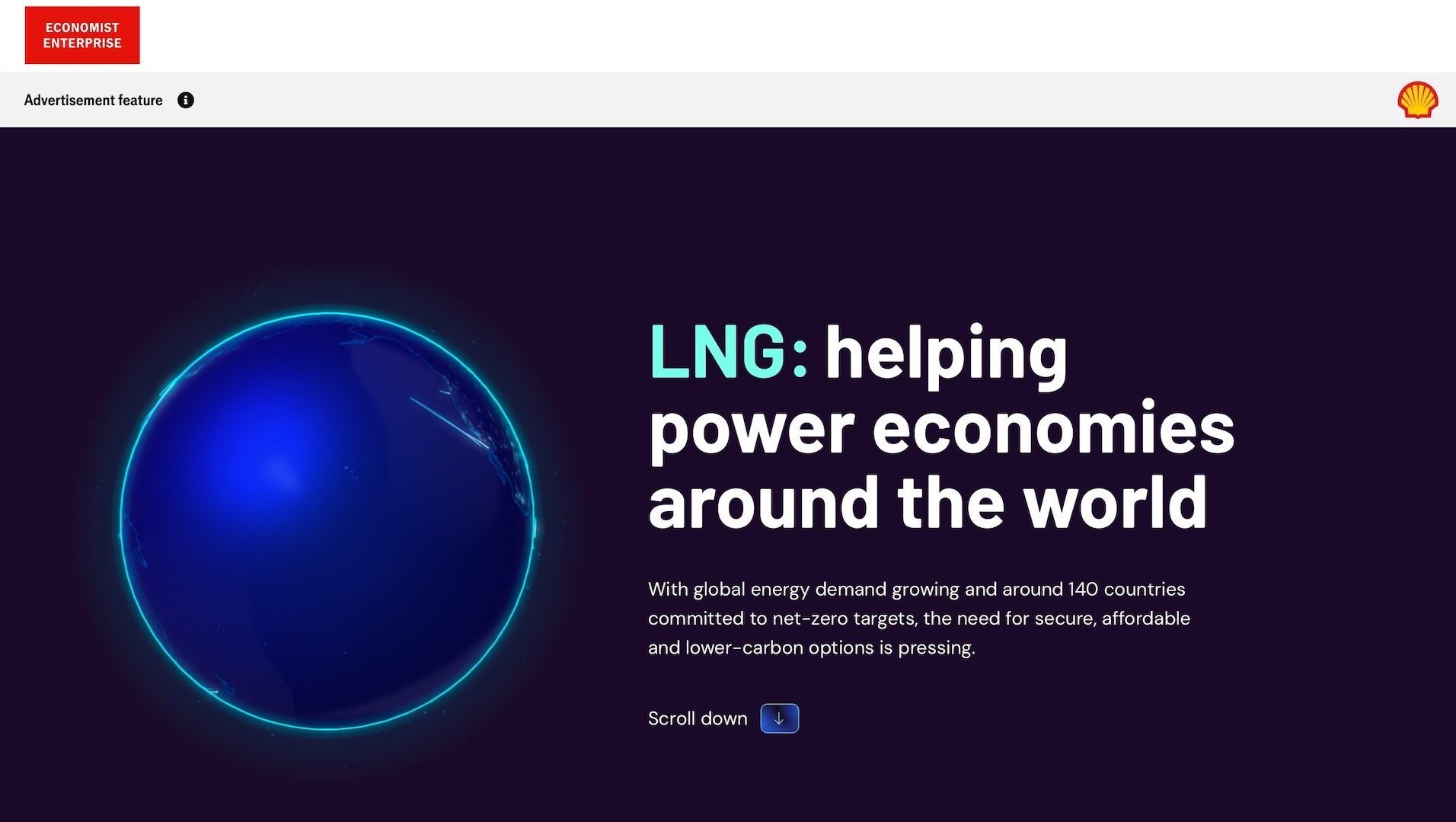
- Economist Enterprise – “LNG & Energy Security” campaign LNG is one of the most contested topics in the energy security and transition debate. Working closely with Economist Enterprise, a content framework grounded in evidence, systems thinking and policy realism was developed. The content humanised complexity without oversimplification, positioning Shell as a pragmatic leader balancing energy security and emissions reduction.
Crucially, these were not three isolated executions. These partnerships were designed as a portfolio of partnerships, each laddering up to a single objective: strengthening Shell’s trust, credibility and leadership credentials.
This required deep collaboration in aligning multiple Shell customers as well as internal stakeholders and publishers. The result was a coherent content ecosystem that proved even the most complex stories can be told in a credible, human and authoritative way — when built with rigour, collaboration and partnership.
Media/Content Amplification Solution
Our amplification strategy prioritised quality of influence over volume, grounded in the belief that trust is built through relevance, credible context and sustained attention rather than repetition. Each partnership was designed around how distinct, senior audiences consume, interrogate and value information within trusted editorial ecosystems.
WSJ was activated to reach financial decision‑makers at moments of analytical intent, where performance, risk and execution matter most. Leveraging premium native digital environments alongside national print, Shell’s story was embedded within credible market narratives. For example:
- In Deepwater, content reinforced Shell’s core strengths in capital discipline, safety and reliability, evidencing resilient cash‑generating assets and consistent execution in complex, high‑value environments. High‑impact native placements, homepage takeovers and full‑page print ensured visibility at moments of strategic reading.
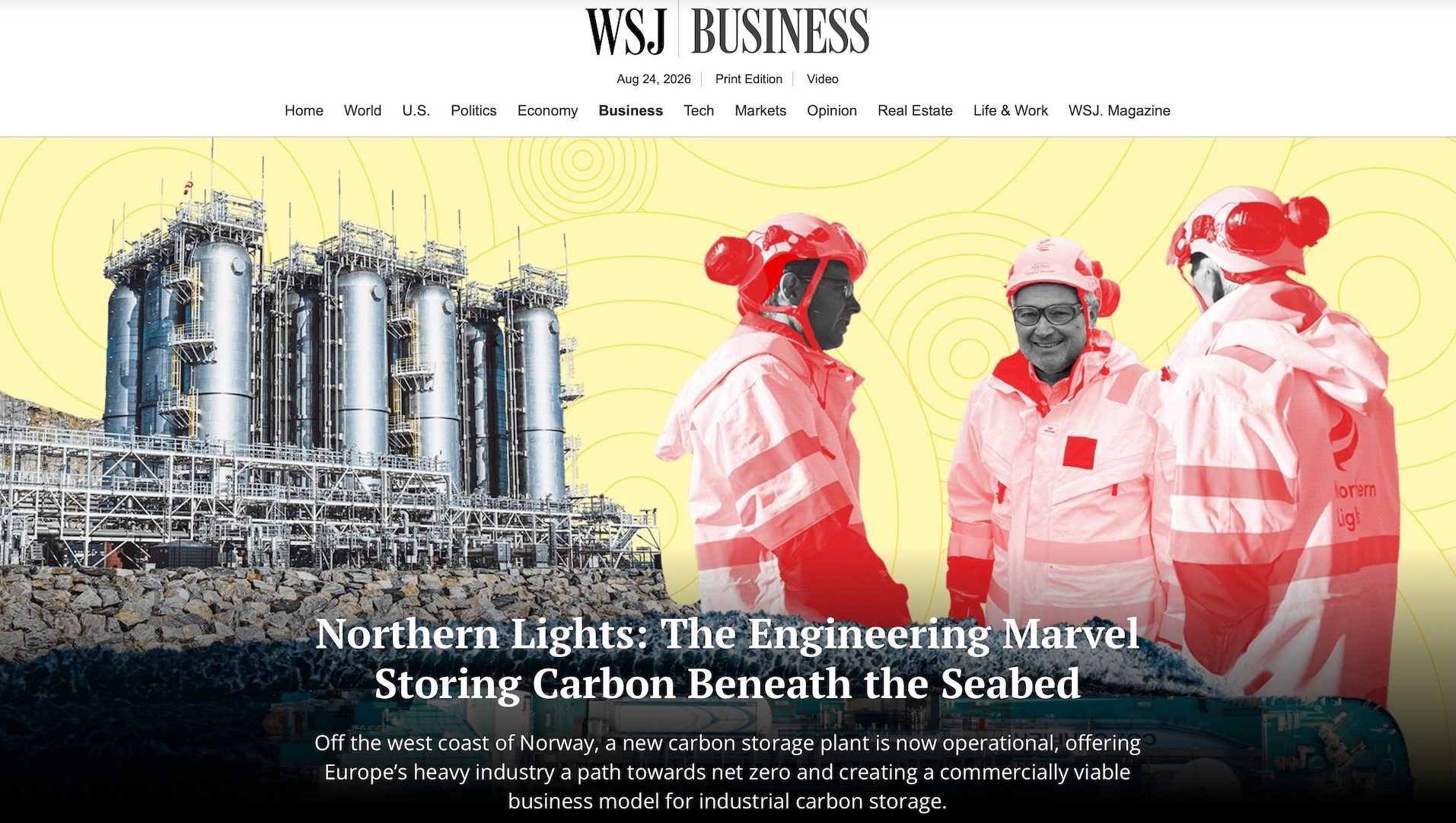
- Through Northern Lights, WSJ Performance delivered content demonstrated Shell’s disciplined execution of large‑scale decarbonisation infrastructure today—spotlighting real milestones, cross‑border delivery and operational readiness. This reframed the energy transition as an investable reality, not a future aspiration.
The FT engagement strategy reflected how C‑suite and board‑level audiences interact with content: slower, deeper and more considered. Photo essays and print placements delivered high dwell time, scroll depth and long‑term stature. For example:
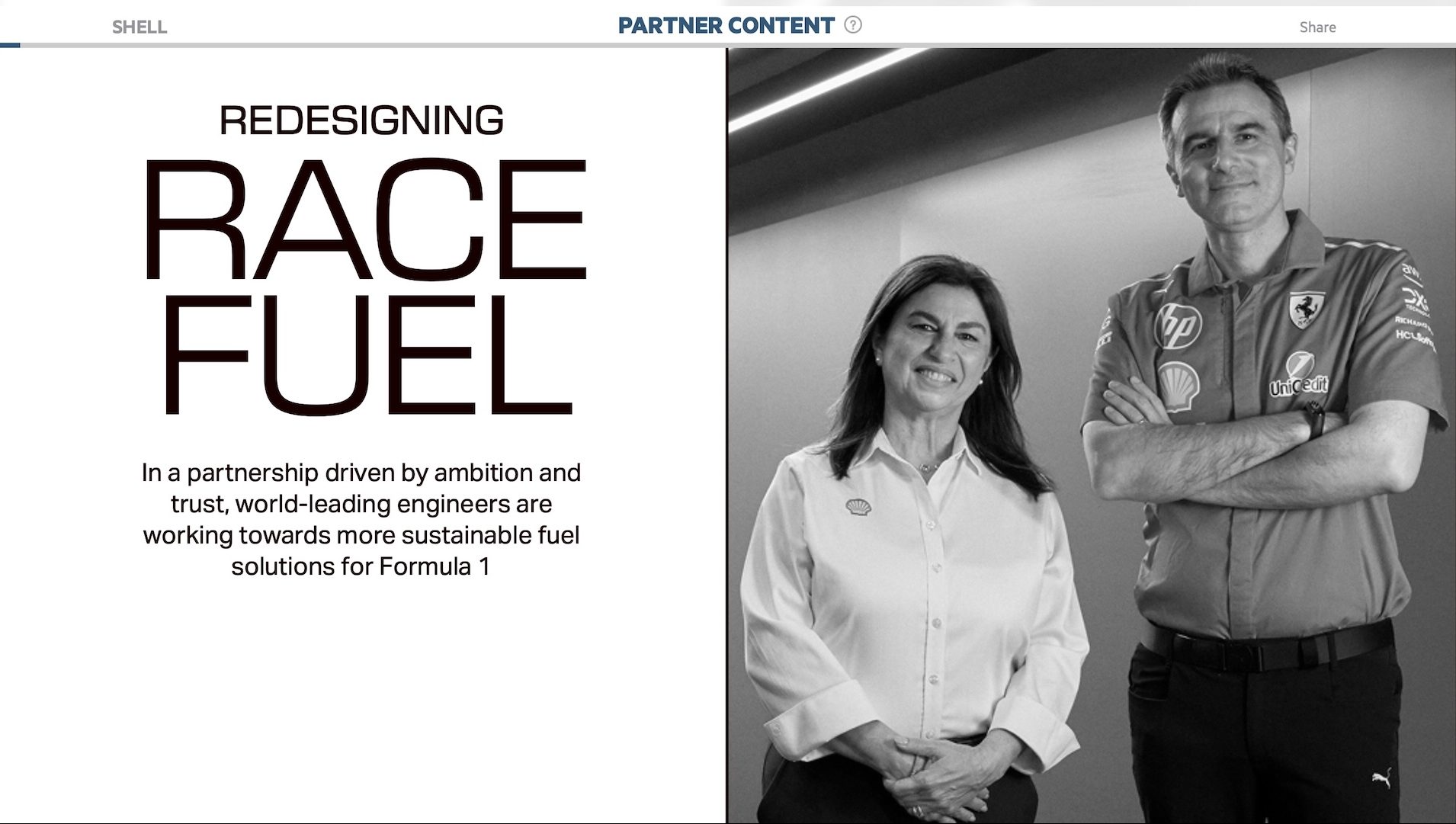
- The Ferrari × Shell partnership positioned Shell as a trusted enterprise collaborator, co‑developing sustainable race fuels for Formula 1’s 2026 regulations. Motorsport acted as a real‑world R&D platform, demonstrating how Shell enables customers to decarbonise without sacrificing performance—translating extreme innovation into scalable commercial solutions.
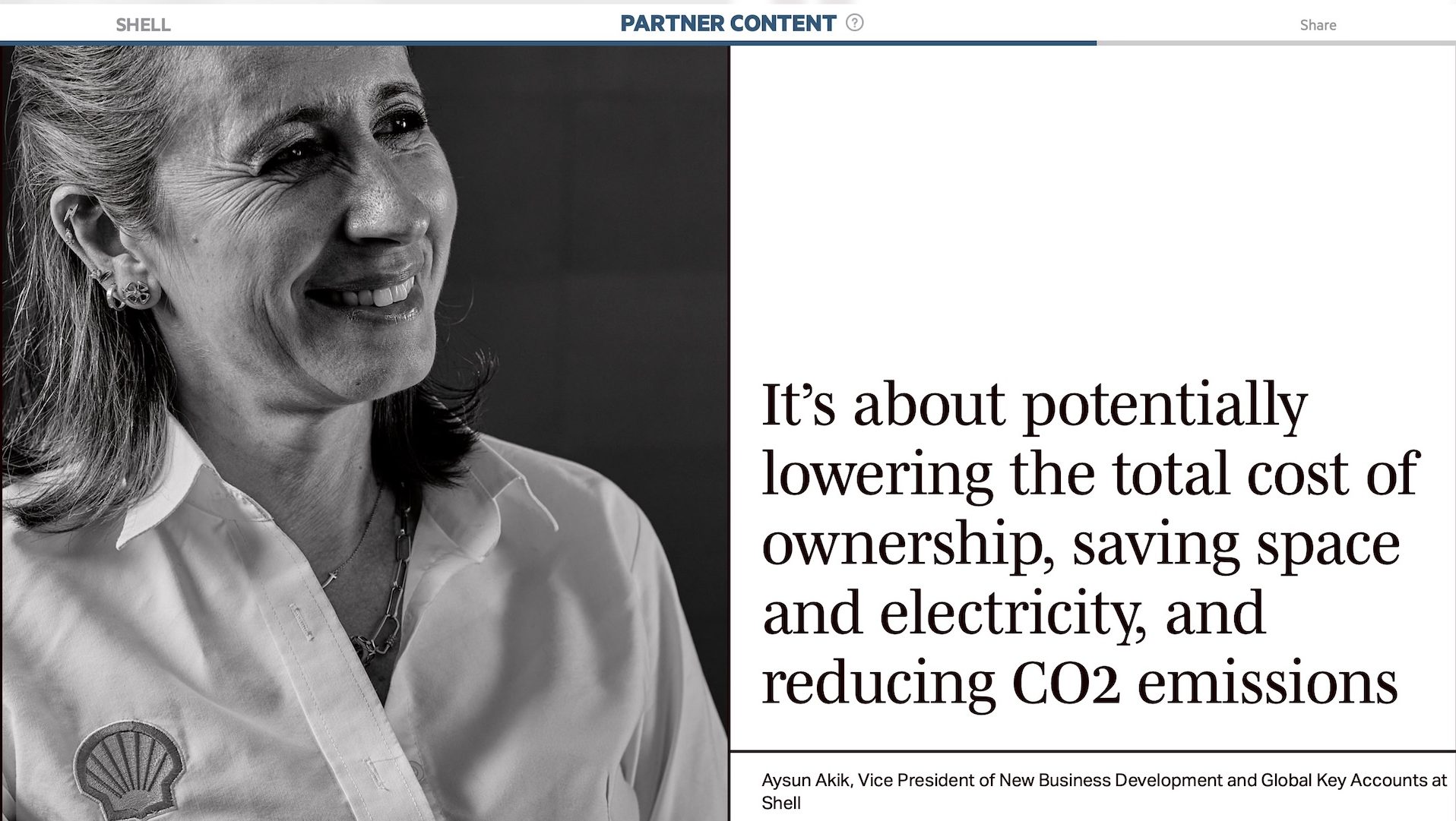
- Similarly, Intel × Shell showcased a certified immersion cooling solution for data centres, proving Shell’s ability to deliver profitable, technically credible decarbonisation at scale. LinkedIn amplification, Dianomi native units and demographic targeting extended reach while preserving editorial trust.
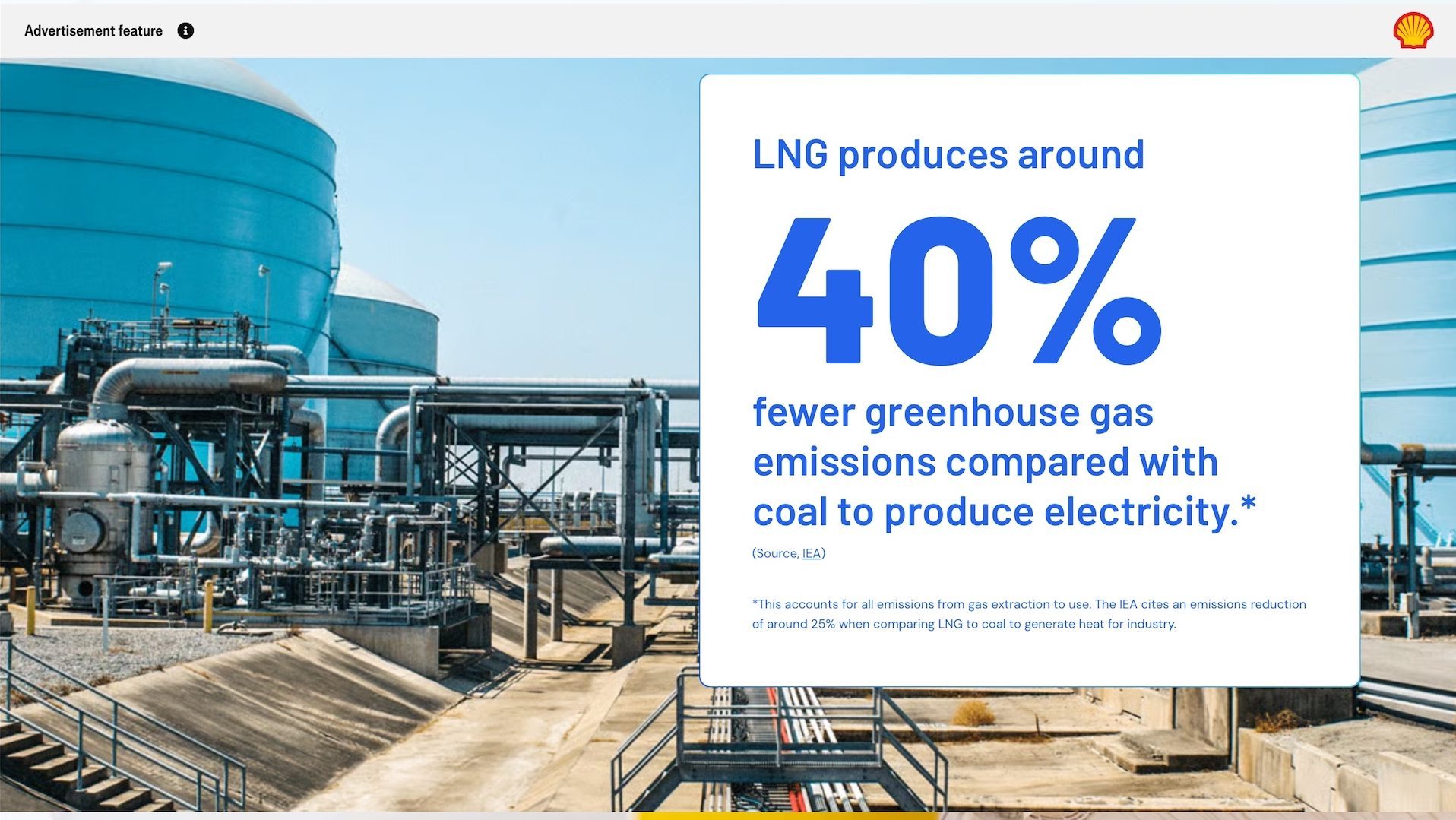
The Economist partnership was built for policymakers and opinion formers who value neutrality, data and depth. A dedicated digital hub anchored content, supported by contextual promotion rather than disruptive formats. Focusing on LNG, data‑led features and infographics compared emissions, mapped global flows and illustrated LNG’s role in balancing renewables—positioning Shell as a global LNG leader delivering energy security while reducing emissions. Print, newsletters and event‑linked amplification reinforced authority and continuity.
Sequencing across all three publishers avoided clutter and ensured messages reinforced one another. Performance learnings consistently showed that native, high‑trust environments outperformed social amplification in driving perception change — validating orchestration, not scale, as the driver of impact in premium audiences.
Results
We delivered impact against Shell ExCo’s most critical KPI: trust!
- WSJ
- +10pp favourability; +9pp consideration.
- Shell ranked #1 vs peers on favourability and investment consideration.
- 81–85% recall with average time spent of 1minute 23 seconds.
- FT
- +12pp low‑carbon trust; +9pp innovation leadership.
- Senior engagement with 75% scroll depth; 1 minute 20 seconds in attention time.
- Reinforced Shell’s position as a long‑term partner for customers navigating decarbonisation.
- EE
- +13pp trust uplift; +15pp LNG leadership perception.
- Strongest credibility among opinion‑formers; 60% average engagement, with 1 minute 20 seconds dwell time.
The key outcome beyond metrics, was how all partnerships operated together in practice. The WSJ work addressed investor confidence directly, using performance‑led storytelling moving Shell to the top of its peer group on favourability and consideration.
The FT focused on partnership in action, telling customer stories, from Ferrari to Intel – that senior business audiences engage with, rather than skimming past.
In parallel, the Economist Enterprise piece tackled trust and LNG leadership among policy‑minded audiences, delivering double‑digit uplifts where scepticism is highest.
Each partnership had distinct jobs but reinforced one another. Investors encountering Shell in the WSJ saw proof of delivery; policymakers and opinion‑formers saw system‑level thinking with EE; business leaders saw how complex challenges are solved through collaboration in the FT, forming a coherent narrative across audiences rather than disconnected executions.
For the first time, Shell’s paid media partnerships were aligned to a single communication strategy, used deliberately alongside earned media, stakeholder engagement and demonstrated, through results, that premium media partnerships can deliver business value when tightly scoped, editorially rigorous and orchestrated with judgement. In doing so, it fundamentally changed how Shell approaches branded content: as a disciplined credibility tool within its wider communications mix, not as a tactical channel.