Awards finalist (2026)
Julius Baer: Make the Most of Tomorrow
Brand:
Julius Baer
Entered by:
Financial Times
Credits:
FT, FT Partner Content
Category:
Financial Services



Strategic Solution
The strategy identified a profound shift in the psychology of wealth. Legacy is no longer defined purely by inheritance or preservation. Increasingly, affluent audiences view wealth as a tool for shaping businesses, families, passions and wider societal impact.
The strategy therefore moved beyond traditional private banking communication and repositioned Julius Baer as a partner in navigating life’s defining decisions, not simply managing assets.
In partnership with the Financial Times, Julius Baer created Make the Most of Tomorrow, a long-term editorial platform designed to reframe the meaning of wealth through a more personal and culturally relevant lens. The Financial Times provided the ideal environment for this repositioning. Its readership combines global influence, financial sophistication and cultural curiosity, making it uniquely suited to conversations around legacy, entrepreneurship and purpose-driven wealth.
The platform was structured around three interconnected pillars: capital, succession and passion. Together, these themes reflected the real tensions and aspirations shaping modern wealth management. This editorial architecture allowed complex financial conversations to become intuitive, emotionally engaging and easier to navigate.
Rather than leading with financial products or technical expertise, the strategy focused on lived experiences. Entrepreneurs explored second careers and passion ventures. Families navigated succession and generational change. Investors examined how capital can shape industries and communities.
Every element of the strategy prioritised trust through relevance. The objective was not simply to generate awareness, but to earn meaningful attention from senior audiences who are notoriously difficult to engage.
The result was a content ecosystem designed to feel less like financial marketing and more like premium editorial storytelling. By embedding Julius Baer naturally within conversations around ambition, identity and legacy, the campaign transformed wealth management from a transactional category into a human one.
Content Solution
Financial Times Partner Content approached the challenge by fundamentally rethinking the role of financial content itself.
Instead of explaining wealth through products, charts and performance language, Make the Most of Tomorrow explored wealth through people, decisions and lived experience.
The platform was built around three editorial pillars: capital, succession and passion. Each represented a defining dimension of modern wealth management while creating a coherent narrative structure that audiences could intuitively navigate. Together, they expanded the conversation beyond finance into questions of legacy, identity and purpose.
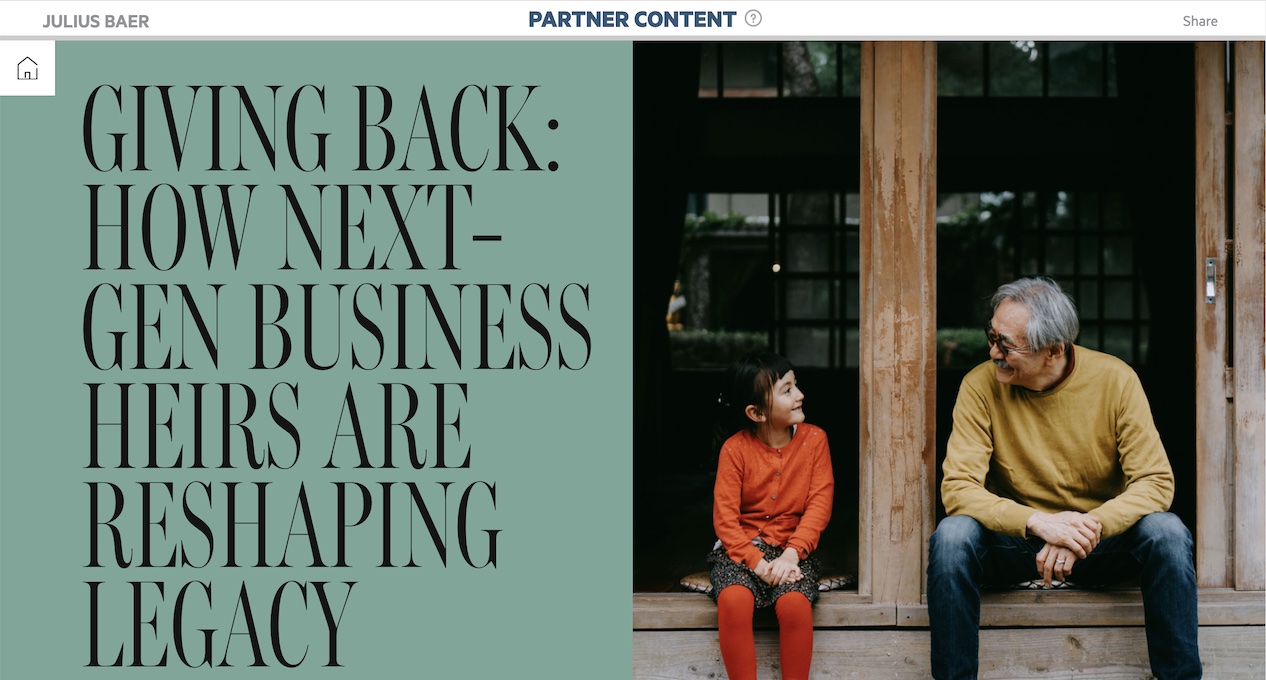
The storytelling prioritised human experience over institutional authority. Entrepreneurs explored what happens after building and selling a business. Families confronted the emotional realities of succession planning. Investors examined opportunities where personal passion intersects with financial growth.
A rich mix of formats brought these stories to life. Long-form editorial delivered depth and authority. Data-led features translated financial complexity into accessible insight. High-quality films and photography introduced emotional texture and intimacy, helping abstract financial themes feel tangible and relatable.
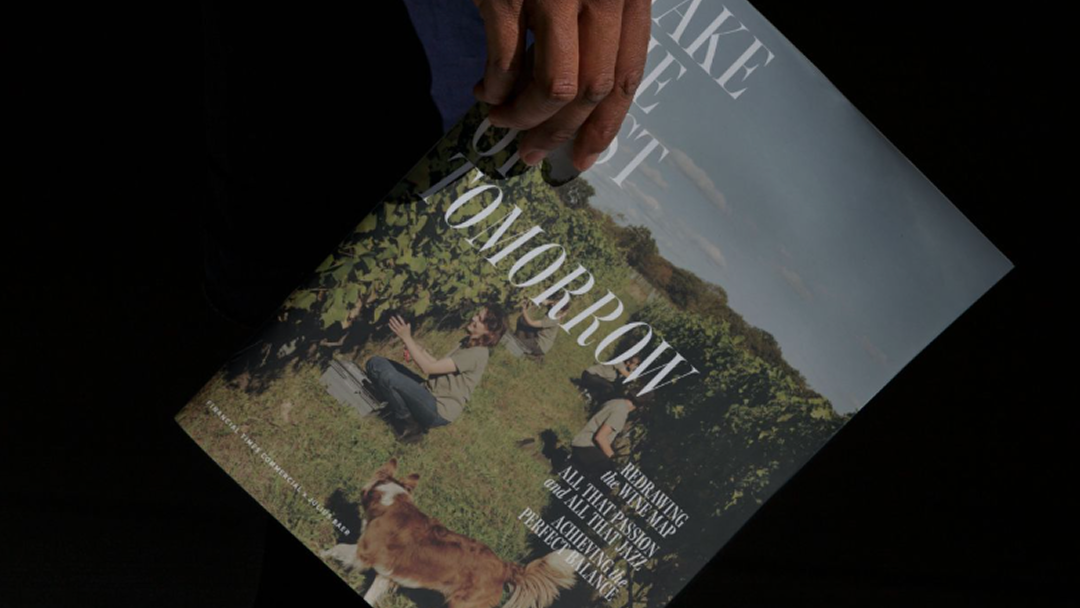
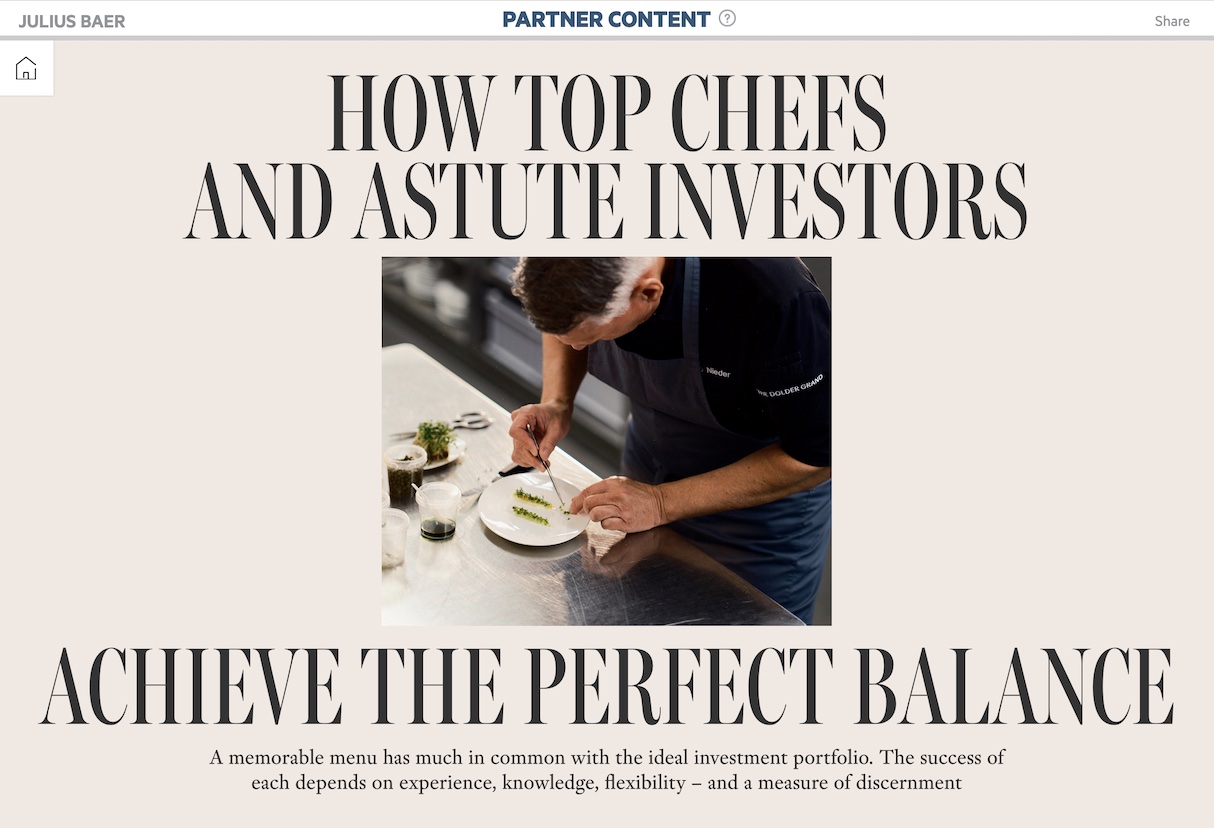
The visual language deliberately departed from conventional financial advertising. Natural light portraiture, cinematic framing and observational photography created a more human and reflective aesthetic inspired by the editorial sensibility of FT Weekend and HTSI. Contributors were captured in their own environments, from vineyards and restaurants to family homes and entrepreneurial spaces, reinforcing authenticity and credibility.
Archive materials and found footage were integrated throughout the experience to create layered narratives connecting past, present and future. This approach introduced emotional depth while visually reinforcing the campaign’s central idea: legacy is something continually shaped across generations.
The platform also experimented with more immersive storytelling formats, including mixed-media photo essays combining still imagery, subtle motion and editorial design. These executions helped complex wealth themes feel more sensory, contemporary and culturally relevant.
Every element was designed to meet Financial Times editorial standards, ensuring the work sat naturally within a premium publishing environment rather than interrupting it.
The result was a content experience that transformed private banking into something more emotionally intelligent, culturally resonant and genuinely engaging for modern wealthy audiences.
Media/Content Amplification Solution
To engage an influential but highly selective audience, the amplification strategy combined precision targeting, premium editorial environments and multi-platform storytelling. Using the FT’s first-party audience data to identify and reach high-net-worth readers, entrepreneurs, investors and senior decision-makers across key global markets. Contextual targeting placed Julius Baer alongside editorial environments already associated with wealth, ambition and cultural sophistication, including FT Wealth, FT Weekend and HTSI.
The amplification strategy was designed around both pull and push dynamics. Digital traffic drivers across FT.com and social channels pulled audiences into the editorial experience through native formats, homepage sponsorships and visually rich display creative. Simultaneously, print placements, sponsored copies and event integrations extended the campaign beyond digital environments and pushed the content directly into premium physical spaces associated with affluent readership.
Creative continuity was central throughout. Marketing assets mirrored the campaign’s editorial aesthetic rather than traditional financial advertising. Cinematic photography, refined typography and emotionally led visuals created consistency across every touchpoint, helping the campaign feel native to the FT environment.
Social amplification across LinkedIn focused on senior professionals, investment audiences and C-suite decision-makers, while broader targeting across premium lifestyle and wealth-interest segments extended reach among affluent readers. Retargeting ensured audiences were re-engaged as new stories launched, encouraging repeat visitation and deeper platform engagement over time.
The campaign also leveraged some of the FT’s most influential environments to strengthen credibility and contextual relevance. FT Wealth provided direct access to globally affluent readers actively seeking insight around succession, investing and legacy planning. HTSI extended the platform into luxury, culture and lifestyle spaces, reinforcing the idea that wealth today is as much about experience and identity as financial performance.
Print advertorials and sponsored newspaper wraps added further visibility and physical presence, while integration into the FT Weekend Festival connected Julius Baer with culturally curious audiences through live conversation and experiential storytelling.
Together, the strategy created an ecosystem where editorial content, media placement and audience targeting reinforced one another. Rather than relying on interruption-based advertising, the campaign earned engagement by meeting affluent audiences within trusted environments already aligned to their interests, behaviours and ambitions.
Results
The campaign demonstrated that when financial storytelling becomes more human, audiences engage more deeply.
Make the Most of Tomorrow significantly exceeded performance expectations across every major metric, proving the effectiveness of a content-led approach in one of the world’s most conservative categories.
Content performance exceeded page view targets by nearly 200 percent, demonstrating strong demand for editorially driven wealth content among affluent audiences. More than 11,500 unique users engaged with the platform, with exceptionally high audience quality throughout.
Crucially, the campaign reached the right people. Of known audiences, 29 percent were C-suite and a further 29 percent were senior decision-makers, confirming strong resonance among influential business leaders and wealthy individuals.
Engagement levels significantly outperformed benchmark expectations. Average attention time exceeded Financial Times benchmarks by 10 percent, while audiences collectively spent more than 148 hours actively engaging with the content. This demonstrated not passive browsing, but sustained interaction with complex financial themes.
Amplification performance reinforced this success. Total marketing impressions exceeded the original target by more than 100 percent, while native traffic-driving formats delivered click-through rates substantially above benchmark. Homepage sponsorship activity performed particularly strongly, exceeding benchmark performance by more than 50 percent.
LinkedIn amplification also delivered exceptional quality engagement among senior professional audiences, with engagement rates significantly above target and strong traction among companies including PwC, EY, Deloitte and KPMG.
Most importantly, the campaign successfully repositioned Julius Baer within a broader cultural and emotional conversation around wealth. Rather than simply communicating expertise, the platform created meaningful relevance for a new generation of affluent audiences increasingly focused on purpose, legacy and impact.