Highly Commended (2026) 🏅
Equinor: People Power – Humanising the energy transition
Brand:
Equinor
Entered by:
Financial Times
Credits:
FT Studios, Universal McCann Worldwide
Category:
Brand & Media Owner Partnership (Under €1m)


Together, the partnership deliberately shifted the focus of the campaign away from corporate innovation messaging toward the lived experience of transition itself. The challenge became not simply explaining infrastructure, but humanising it – showing the people, skills and communities behind industrial transformation.
The opportunity emerged at a critical moment. Following major final investment decisions on projects including Net Zero Teesside Power and the Northern Endurance Partnership, Equinor could move the conversation from ambition to action.
Together, the challenge became clear: create a content platform capable of re-framing how elite audiences viewed Equinor – shifting perception from a traditional energy company navigating transition pressures to an active participant helping build Britain’s future energy infrastructure through collaboration, long-term investment and people-led transformation.
Content Solution
The creative solution was built around a deliberate strategic shift: moving the story away from energy infrastructure and toward the people shaping it.
Following initial conversations between Equinor, Universal McCann and FT Studio at FT HQ, the partnership recognised that a conventional innovation-led campaign would not resonate with policymakers and opinion-formers. While Equinor’s engineering capability and large-scale projects remained central, the FT understood that its audience connects most strongly with the human realities shaping business and politics, the personalities, tensions and lived experiences behind major economic change.
This insight aligned directly with Equinor’s evolving Searching for Better positioning: becoming more curious, open and human in how it communicates. Together, the teams reframed the brief entirely. Rather than simply showcasing technology, the partnership set out to humanise the energy transition itself.
The resulting creative platform, People Power: Humanising the Energy Transition, was built around three core pillars: human storytelling, documentary-led immersion and integrated reinforcement across video, print, digital and targeted amplification.
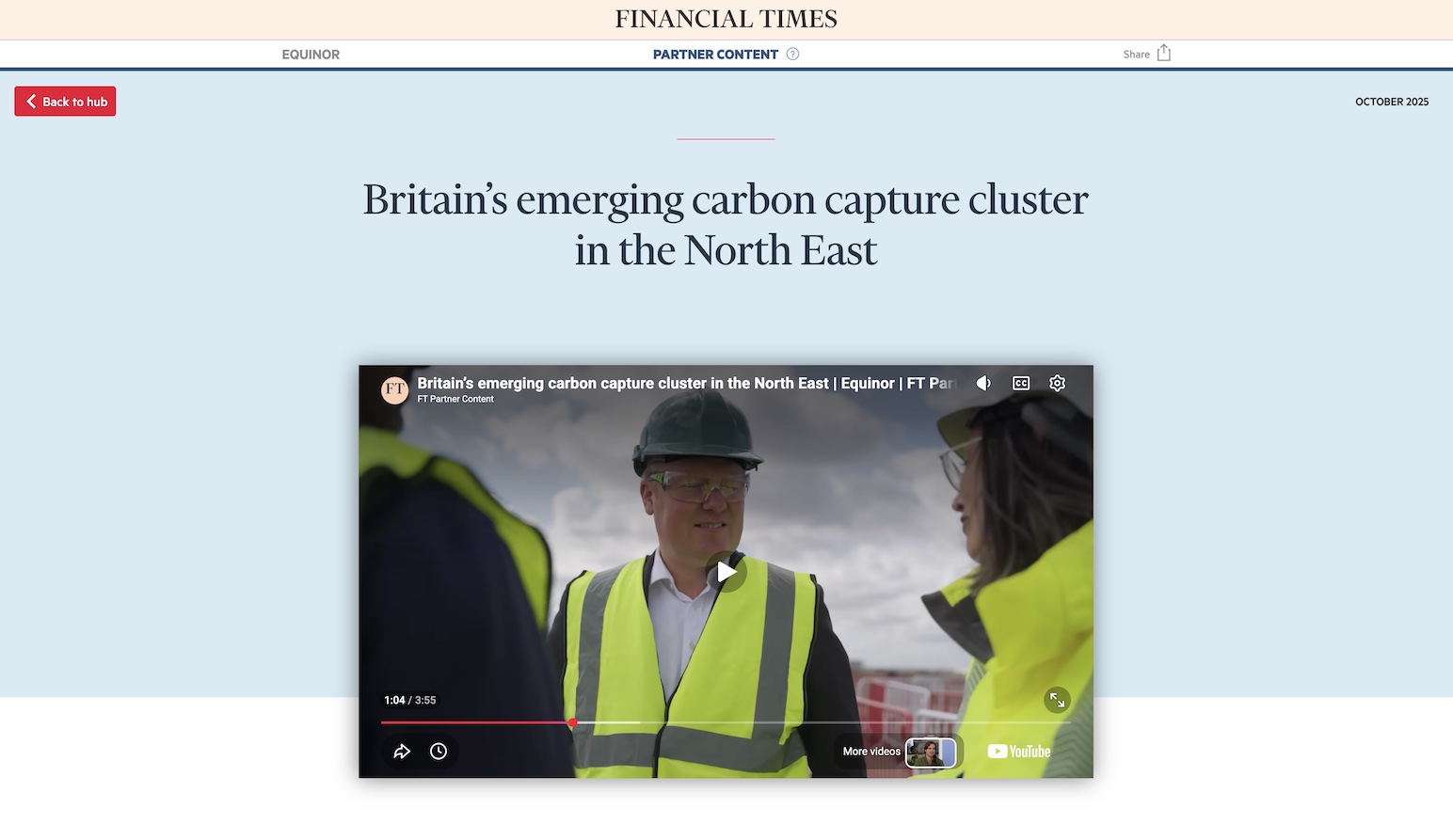
At the centre of the campaign was the flagship mini-documentary, Britain’s Emerging Carbon Capture Cluster, examining how regions such as Teesside and the Humber are being reshaped through carbon capture infrastructure, offshore wind investment and industrial decarbonisation.
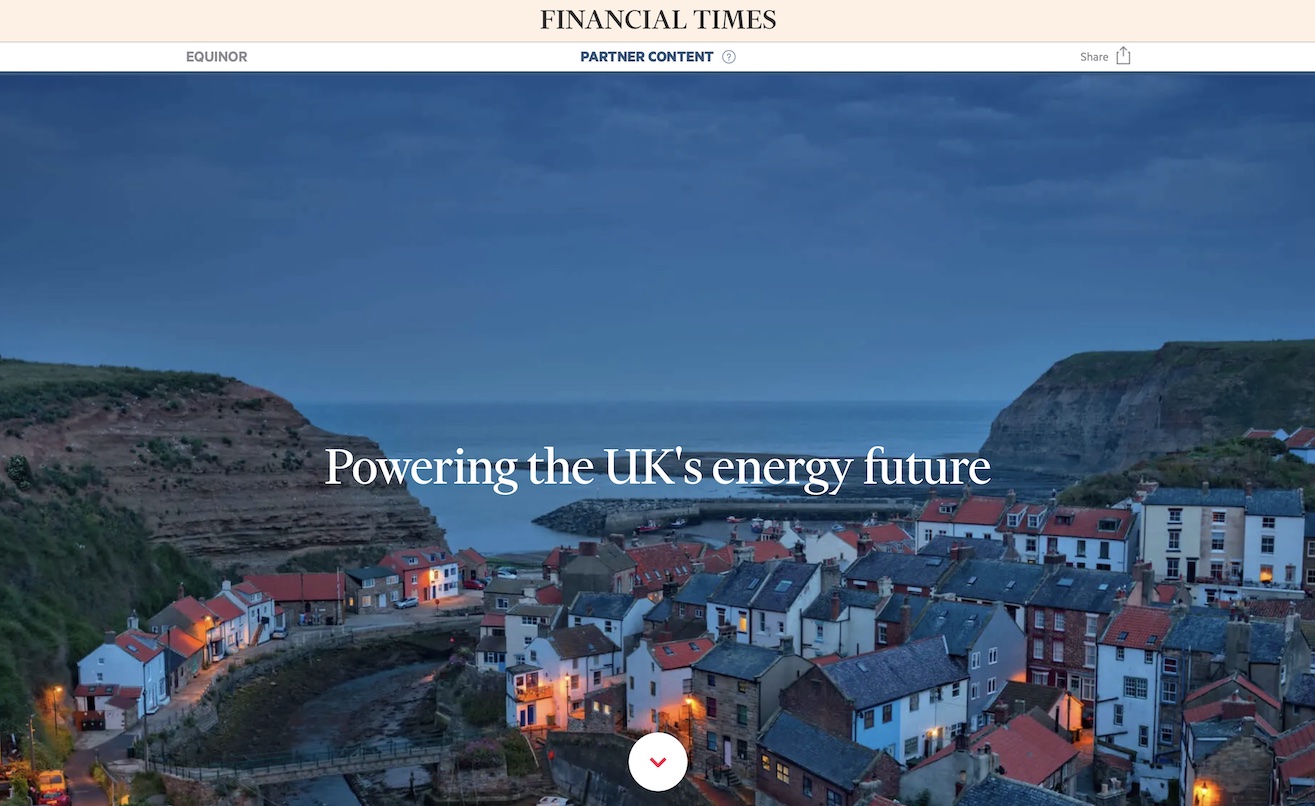
The film grounded the energy transition in the lived experience of regional economic change. Once a global industrial powerhouse, Teesside had experienced decades of decline following the closure of Redcar Steel Works, leaving communities facing economic uncertainty and industrial decline. Rather than focusing purely on engineering ambition, the documentary explored how carbon capture and storage (CCS) could help rebuild industrial Britain, creating new jobs, reskilling workers and providing long-term opportunities for future generations.
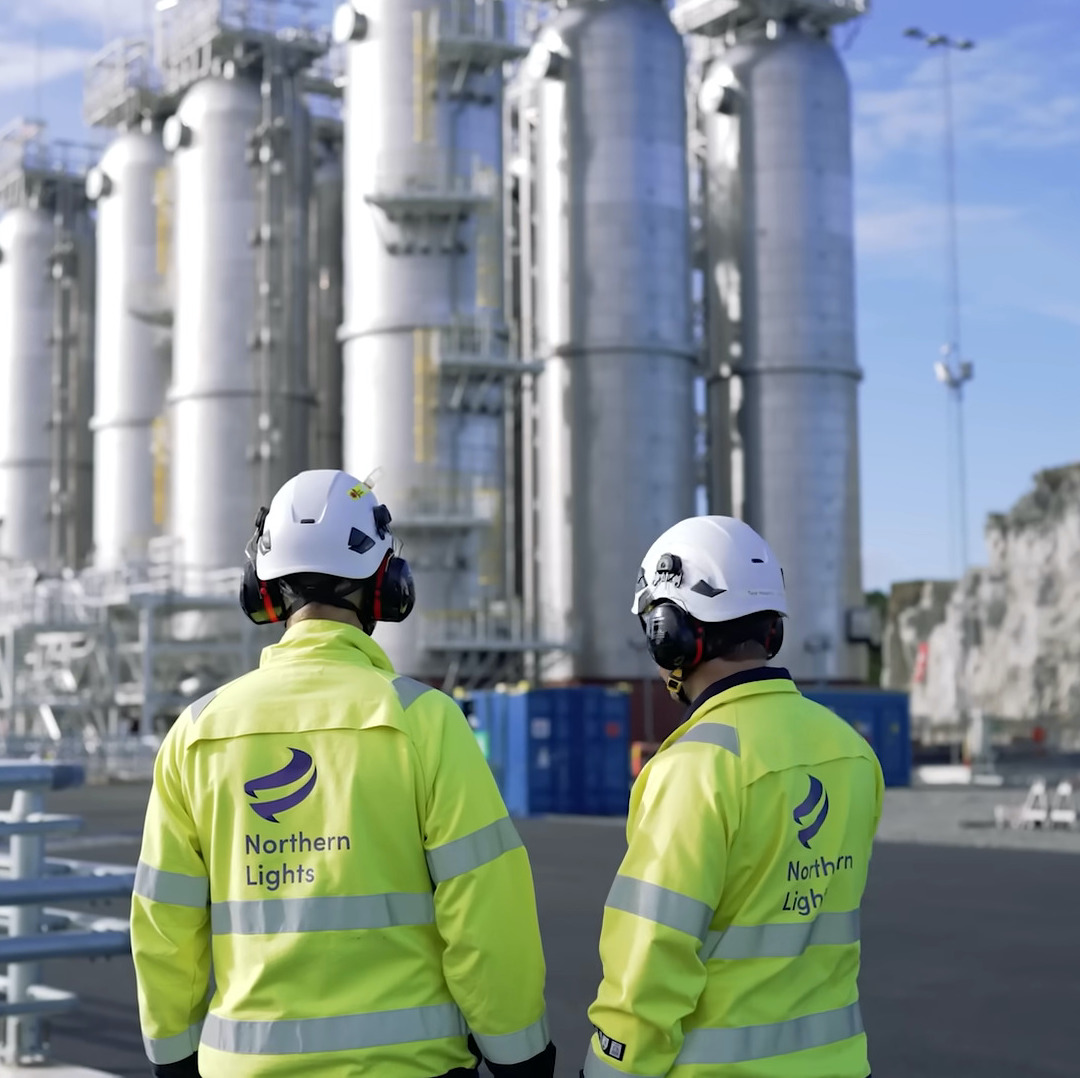
Crucially, the film did not position Equinor executives as the sole voices of authority. Instead, the story unfolded through engineers, apprentices and project managers speaking candidly from active industrial environments, including CCS facilities in Norway, where the technology has operated successfully for more than 25 years.
This observational, documentary-led approach created a rawness and authenticity often absent from corporate sustainability communications, transforming CCS from an abstract technology into something emotionally resonant, politically relevant and deeply human.
Media/Content Amplification Solution
The amplification strategy was designed not simply to maximise reach, but to maximise influence and shift perception among elite policymaking and energy influencer audiences.
Using the FT’s first-party audience data, the partnership targeted senior policymakers, regulators, investors, government stakeholders and business leaders across the UK, Belgium and France – with particular emphasis on Westminster, where energy security and decarbonisation had become defining political and economic issues.
The objective was clear: ensure Equinor was not merely visible within the debate, but actively part of the serious conversations shaping Europe’s energy future.
To achieve this, the FT built an integrated amplification ecosystem designed to reinforce the People Power narrative consistently across trusted FT environments. The flagship documentary and supporting content were hosted within Equinor’s branded FT content hub and amplified through high-impact display, native promoted content units, social distribution and targeted print executions. The hub acted as the central anchor point, allowing audiences to move seamlessly from short-form discovery to deeper long-form engagement.
This multi-format approach was intentional. The docu-film acted as the emotional entry point – bringing audiences closer to the people behind Britain’s industrial transition – while strategic display, print and native placements incrementally reinforced the message over time, ensuring repeated exposure among influential audiences.
Contextual alignment was critical to the strategy’s effectiveness. Rather than interrupting the reader experience, the content sat naturally alongside FT editorial coverage of industrial policy, energy markets, decarbonisation and geopolitical risk. This enabled the partnership to feel less like advertising and more like a credible contribution to wider policy and economic conversations already taking place across the FT ecosystem.
Social platforms extended reach beyond FT-owned environments while maintaining audience quality. LinkedIn and X drove quality attention back to the FT content hub, combining broad visibility with highly targeted engagement. Short-form video edits and static creative used curiosity-led messaging to encourage further exploration of the wider content ecosystem.
YouTube played a distinct role in scaling documentary consumption. By hosting and promoting the full-length film, the platform extended audience reach while maintaining strong engagement with the campaign’s core narrative.
By combining trusted editorial context, emotionally intelligent storytelling and highly targeted amplification, the partnership ensured Equinor became associated with real people, real infrastructure and real industrial transformation, not simply corporate transition messaging.

Brand & Media Owner Partnership (Under €1m) |
Highly Commended
"The judges described this as a strong partnership, and enjoyed the FT’s push back on the original brief to redirect the content. The campaign demonstrated well-executed assets that were aligned to the campaign objectives, with a human approach to the storytelling, all reflected in strong results."
– Judges comments.
Results
The partnership between Equinor, Universal McCann and the Financial Times delivered both exceptional engagement and meaningful perception change among one of Europe’s most influential policymaking and energy audiences.
The campaign generated more than 158,000 video views, exceeding the original KPI target by over 162% – ten times higher than typical FT benchmarks.
But the most important result went beyond performance metrics. Brand research revealed a 23% uplift in audiences associating Equinor with qualities such as being more humble, human and a reliable long-term energy partner – a significant shift among senior policymakers, regulators, investors and opinion-formers shaping Europe’s energy transition.
That outcome stemmed from a fundamental strategic decision made collaboratively by Equinor, Universal McCann and the FT at the very start of the partnership. While the original brief focused heavily on innovation, infrastructure and energy security, the teams recognised that technical corporate messaging alone would not resonate with increasingly sceptical audiences across Westminster and beyond.
Together, the partnership deliberately reframed the challenge: moving the story away from energy infrastructure and toward the people shaping it.
This insight aligned directly with Equinor’s evolving “Searching for Better” positioning – becoming more curious, open and human in how it communicates. The result was People Power: Humanising the Energy Transition – a highly-visual documentary-led storytelling platform centred on engineers, apprentices and communities experiencing industrial transformation first-hand.
Through authentic filmmaking, immersive industrial environments and precision-led amplification using the FT’s first-party audience data, the campaign transformed complex infrastructure into something emotionally resonant, politically relevant and deeply human.