
November 24, 2026
The judges at this year’s World Media Awards were blown away by the work overall. They agreed the strategy, creative and amplification were outstanding, with plenty of “I wish I’d done that” entries that made picking winners genuinely hard.
However, one section kept letting entries down: the Results.
When results count for 25% of the total score, that’s a problem! And it wasn’t that entrants lacked data. It’s that the numbers they shared (page views, impressions, view time) rarely connected back to the objective they’d set out at the start.
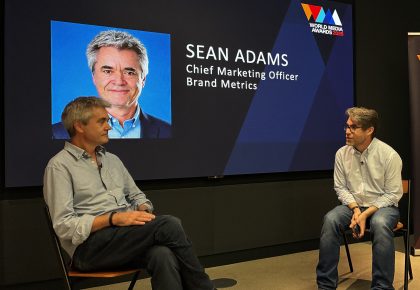
Our new white paper, Making Results Count, sponsored by Brand Metrics, shows you how to fix that. It draws on the experience of Sean Adams, Brand Metrics CMO, who has been a WMA judge for three years running.
His golden rule is simple: a great Results section should read like a story that closes the loop back to the objective, not a list of everything that was tracked.
Five steps to a stronger Results section
- Define success before you launch. Agree the two or three measures that will prove the campaign worked, and write them down before it goes live. Don’t reverse-engineer a story from whatever big numbers turn up in the dashboards afterwards.
- Report outcomes, not just activity. Separate what happened (views, clicks, impressions) from what changed (awareness, consideration, preference, intent). Lead with what changed.
- Make the numbers travel. A number on its own means little to a judge. Put it against a benchmark, and show results market by market where you can. This year’s winners Belmond and Brand Scotland both did this well.
- Show the partnership’s fingerprints. Be specific about what this media partnership made possible that a standard media plan couldn’t.
- Close the loop. Finish by answering “so what happened to the brand because of this?” in plain language, tied back to your objective.
What the Grand Prix winners did well
The white paper looks back at recent WMA Grand Prix winners. Johnnie Walker’s “The Ones Who Keep Walking” (2022) linked 1,000 pieces of press coverage to a 19% sales uplift. “Wales to the World” (2023) helped influence a global FIFA policy change. Since then, winners for Infosys, Cartier and VisitBritain have shown impact on senior engagement, purchase intent and incremental visitor value.
They were very different campaigns, but each had a clearly stated objective and results that proved it had been met.
When sales figures aren’t an option
Not every entrant can draw a straight line to the client’s sales or share price. The paper’s advice is to plan for that early: ask the client what success looks like, and what evidence they’ll let you share, while the campaign is still being scoped.
There are plenty of other credible proof points too, from press coverage and client testimonials to brand lift scores, enquiries and new distribution. And a small budget can work in your favour if you show results relative to spend.
Above all, keep it credible. Name your sources and report results as they are. Judges notice when numbers look too good to be true!
Read the full guide
Making Results Count also includes a ready-to-use checklist covering before launch, writing the entry and the final read-through. It could be the difference between a good entry and one a judge remembers at voting time. Download Making Results Count here.
 World Media Group