Awards finalist (2025)
Zurich: Navigating a World in Transition
Brand:
Zurich
Entered by:
Economist Impact
Credits:
Universal McCann
Category:
Branded Event


Strategic Solution
To create a key moment in time for global business leaders, we considered the themes and expertise that would combine to create a timely, insightful event that would “cut through the noise” in Davos, convening those stakeholders and giving a lasting impression – both of the conversation and Zurich Insurance’s brand – with a “wow factor”.
Hot on the heels of Trump’s inauguration (the session took place later that week) we landed on AI and energy, with a US focus, as two interlinked but individually – critical areas driving decision-making and global superpower status. The uncertainty in these areas aligned well with Zurich Insurance’s positioning on risk and resilience, with enough editorial distance to package this session as a critical and balanced conversation that explores themes that are top of mind for the global business community.
The annual meeting of the World Economic Forum (WEF) in Davos, Switzerland convenes influential leaders to tackle pressing global challenges and harness emerging opportunities. This stood out as a priority engagement opportunity for Zurich Insurance with its target stakeholder group.
Every year, Economist Impact, the commercial events and policy-insights division of The Economist Group, collaborates with our partners to host thought-provoking discussions which spark debate and inspire conversations beyond Davos.
Leveraging our brand credibility, global reach and network, we ignite global dialogue into the evolving business and policy landscape and inspire bold solutions to the most pressing challenges and opportunities of our time.
Content Solution
On the sidelines of the World Economic Forum Annual Meeting in Davos, Economist Impact programmed a two-session event titled Navigating a world in transition: Finding clarity amid chaos, supported by Zurich Insurance. The event explored two interconnected topics that are top of mind for business and governments, moderated by The Economist’s editor-in-chief, Zanny Minton Beddoes.
The framing was devised to lean into The Economist Group’s brand strengths, while positioning Zurich Insurance’s brand as an enabler of a forward-thinking, business-critical conversation, with a differentiated value proposition versus other sessions and programming taking place in Davos that week.
The global economic and political order is fraying as old certainties are re-examined and new challenges arise. From the rise and risks of artificial intelligence, to the threat of climate chaos and need for an energy transition, the world has never been more dangerous at a time when potential benefits are as immense.
How should leaders think about the world and harness the opportunities? What are the forces of change that will have the biggest impact? Will the green energy transition be stymied? Can global trade be sustained amid ratcheting tariffs? Is there a way to mitigate the geopolitical tensions scaring the world?
Economist Impact secured global experts with unique perspectives on these topics to draw an audience of senior business leaders and provide a lasting impression.
The sessions and speakers were:
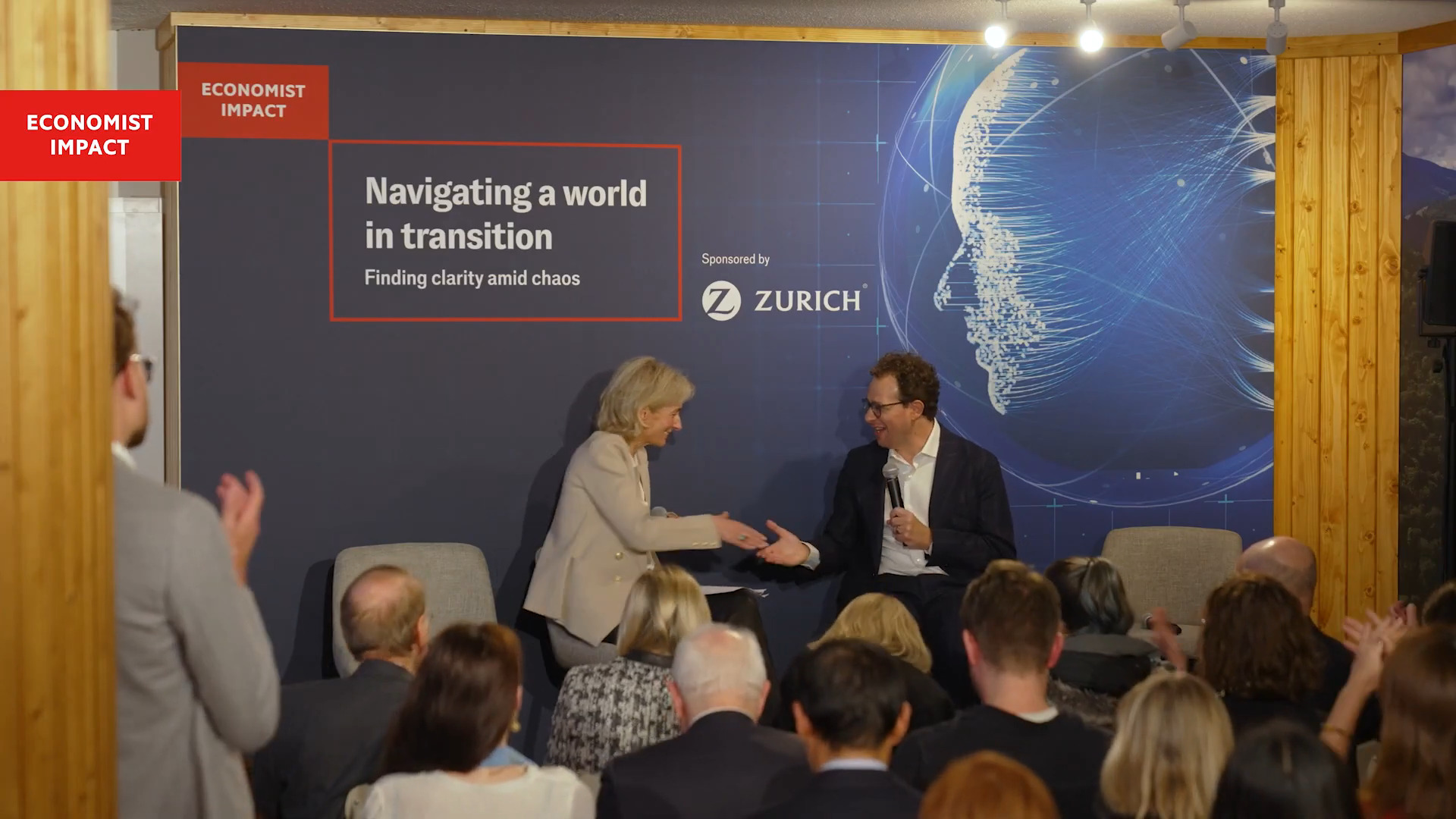
Dario Amodei in conversation with Zanny Minton Beddoes:
Zanny Minton Beddoes, editor-in-chief at The Economist interviewed Dario Amodei, chief executive of Anthropic in Davos on the state of AI models, US leadership, export controls, energy consumption, democratic coalitions for compute power and more.
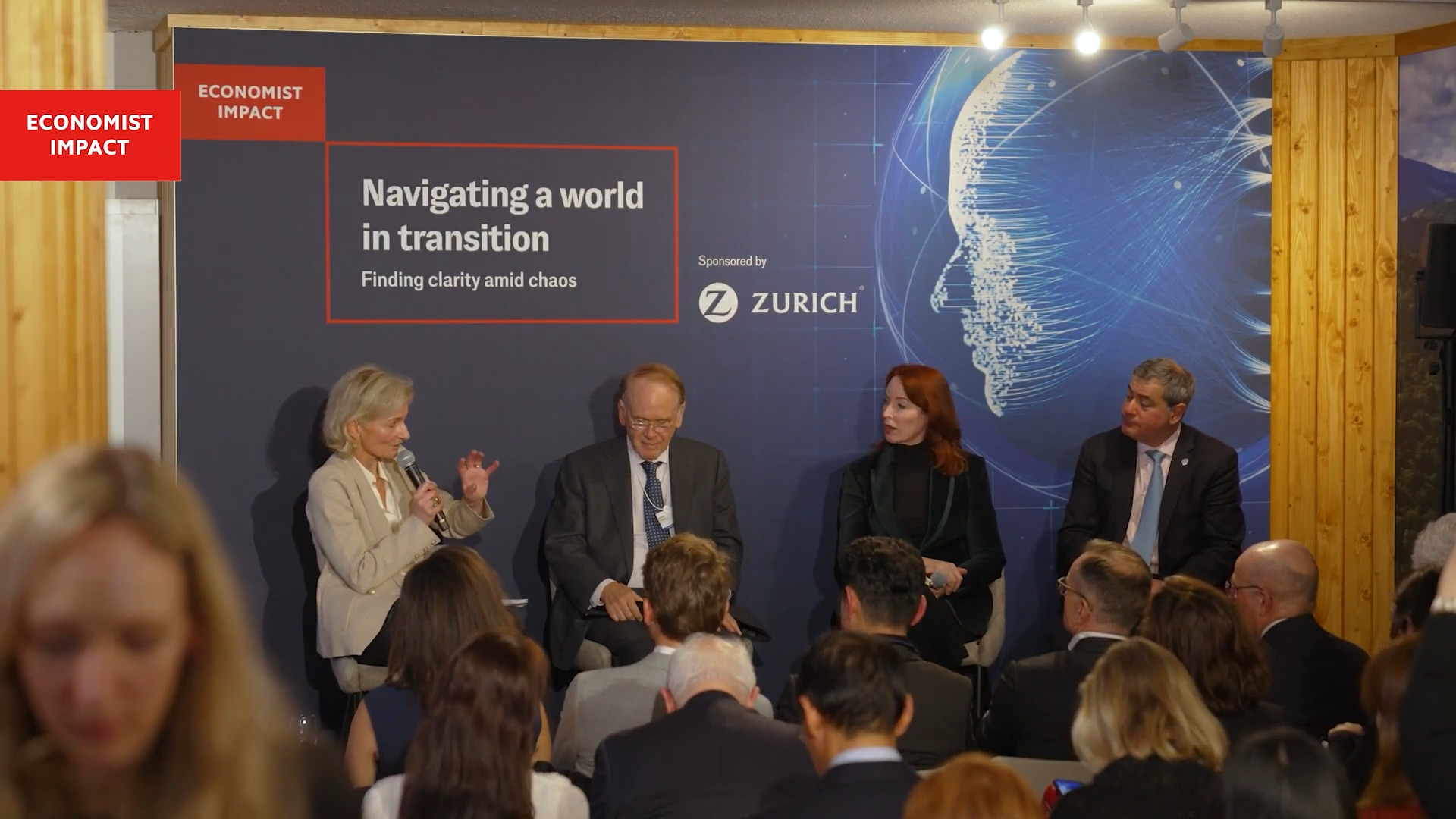
Panel discussion – Power shifts: What next for Energy and Geopolitics?
An expert panel discussed the price of electricity, the role of renewables and Americaʼs power consumption of AI (around 4% of the countryʼs energy use).
Pressing discussion points included: How can countries and companies manage the new business and geopolitical environment? What impact may Donald Trump’s presidency have on global energy and climate goals? What lessons should the world learn from Russia’s war in Ukraine? How can countries co-operate to improve energy security and decarbonisation efforts?
Panel speakers:
- Zanny Minton Beddoes, editor-in-chief, The Economist.
- Jason Bordoff, founding director, Centre on Global Energy Policy, Columbia University School of International and Public Affairs.
- Meghan O’Sullivan, director, Belfer Center for Science and International Affairs.
- Daniel Yergin, vice-chairman, S&P Global.
Results
The combination of an intimate, exclusive in-person setting for a target stakeholder group – especially at Davos – with a broader amplification campaign delivered across the objectives of the programme.
The event itself demonstrated remarkable convening power and delivered on the brief of curating an unmissable “moment in time” during an influential week at Davos, across 28 countries, in C-level seniority; and from industries including financial services, information technology, professional services, government, NGOs, academia, healthcare and more
Feedback on-site included “mind blowingˮ and “masterfulˮ, with many attendees commenting that the session was positioned as one of their Davos highlights:
- “Iʼve seen Zanny do many great interviews but that was really exceptional. It was so mind opening and she was so in command of the discussion that it’s an interview that you have to keep thinking about to assimilate the full implications of it.”
- “The best session of the week was at Zurich House – I wonʼt sleep tonight, my brain wonʼt stop thinking of this session.”
- “Interview with Dario Amodei was mind blowing.”
- “Phenomenal interview.”
- “Zanny Minton Beddoes did an excellent job drawing all speakers out; first, on the potential of new AI models to upend the economy and society and then the panel on the energy implications. Some good food for thought.”
The additional amplification expanded the reach of the insights and Zurich Insurance’s brand – across The Economist ecosystem with external coverage including:
- Financial Times article by Martin Wolf, posted January 28th, 2025.
- Jason Bordoff round-up, posted January 27th, 2025.