Awards finalist (2026)
Siemens Energy: Unlocking the Grid
Brand:
TotalEnergies
Entered by:
New York Times Advertising
Credits:
New York Times, EssenceMediacom
Category:
Corporate Influencer


Strategic Solution
The campaign set out to build recognition and relevance for Siemens Energy among an influential U.S. audience of policymakers, regulators, and senior business leaders. The core challenge was not a lack of impact, but a lack of visibility: Siemens Energy plays a fundamental role in powering modern life, yet the infrastructure it enables is rarely understood in connected, system-wide terms.
Our strategy was built around a single idea: turn complexity into clarity. Rather than presenting energy as a series of disconnected technologies or abstract policy themes, we aimed to help audiences understand it as an interconnected system. A puzzle where each piece only makes sense in relation to the whole, and where Siemens Energy is a critical enabler across that system.
This approach aligned directly with Siemens Energy’s goal of strengthening its presence in the U.S. market and reinforcing its position as a trusted voice in conversations around energy transition, resilience, and infrastructure investment.
The NYT provided the ideal environment to achieve this. Its credibility with policymakers and business leaders, combined with its strength in explaining complex topics, allowed us to situate Siemens Energy within a trusted, high-attention context.
By reframing the energy system in a way that was accessible, navigable, and grounded in real-world geography, the strategy helped bridge the gap between technical complexity and decision-maker understanding.
Content Solution
To bring the strategy to life, we created Unlocking the Grid, an interactive Paid Post experience designed to make the U.S. electricity system easier to explore, understand, and seamlessly navigate.
The New York Times newsroom is continually investing in graphic journalism and visual reporting, with remarkable results for audiences. We wanted to draw on those same learnings and apply this visual storytelling approach to Siemens Energy, helping translate their complex ideas into clearer, more accessible visual formats.
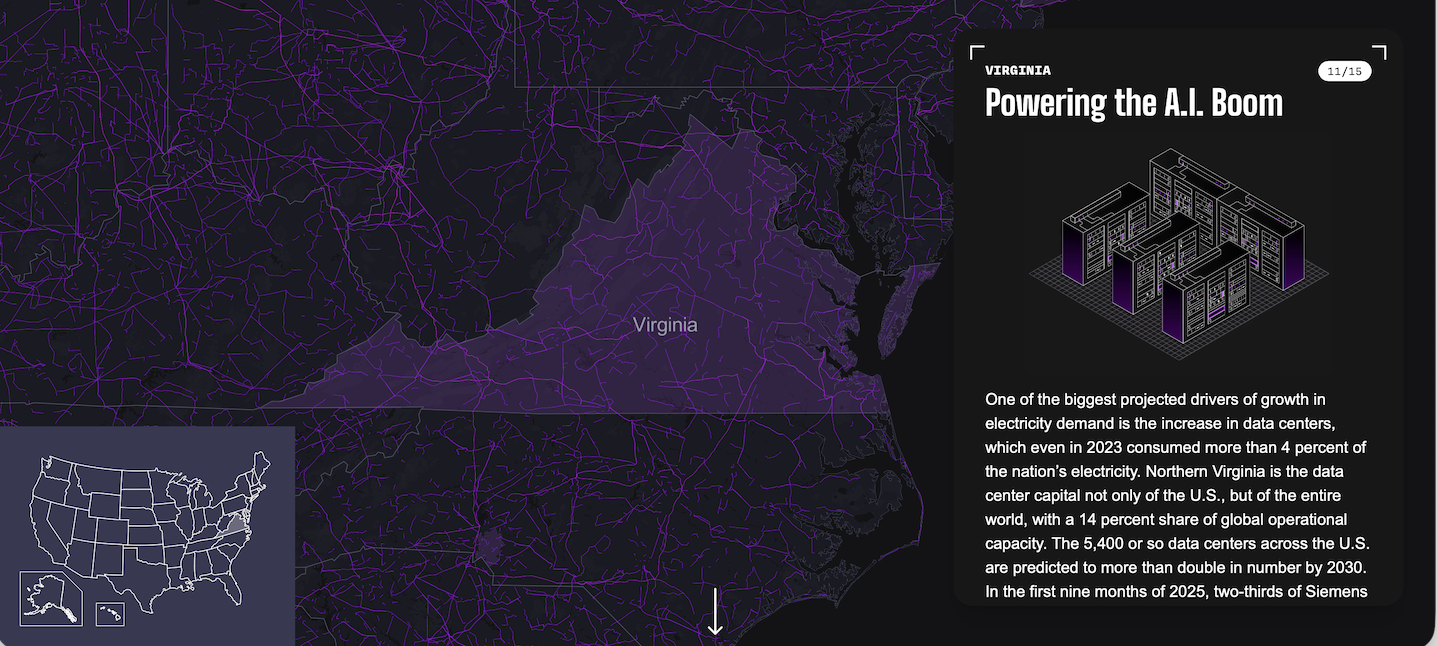
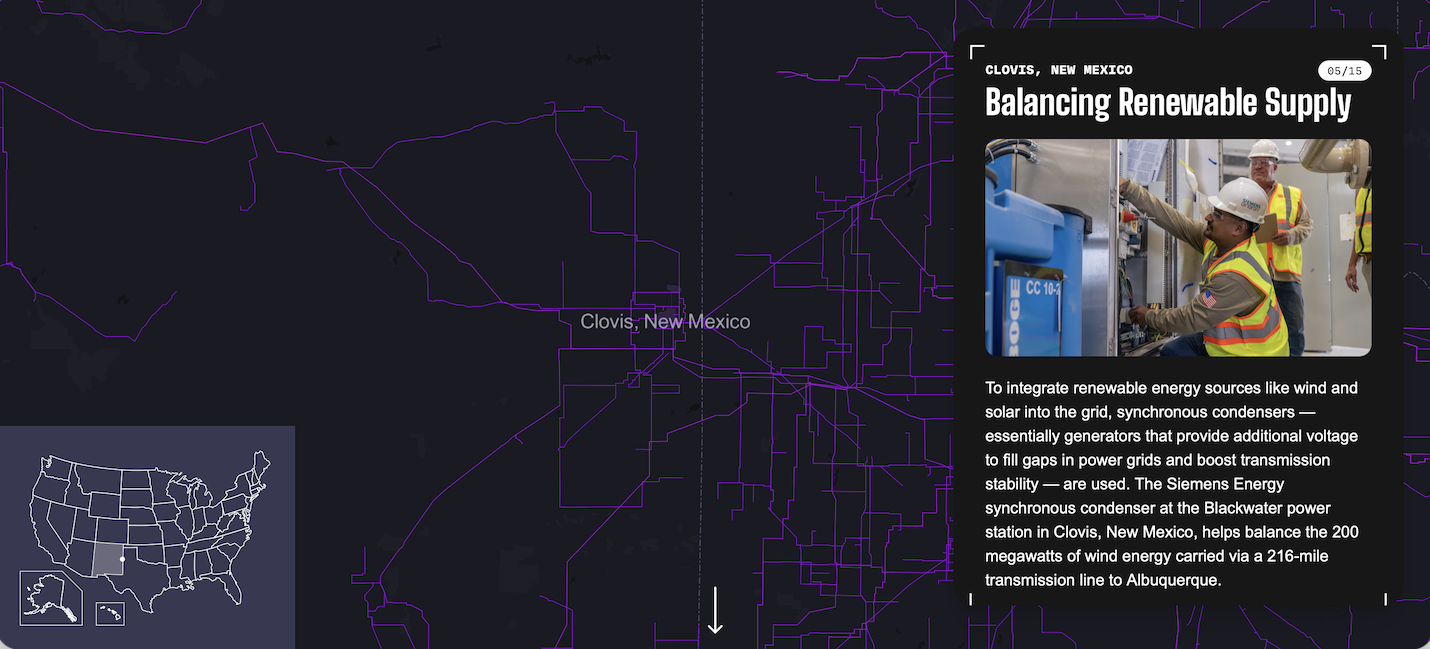
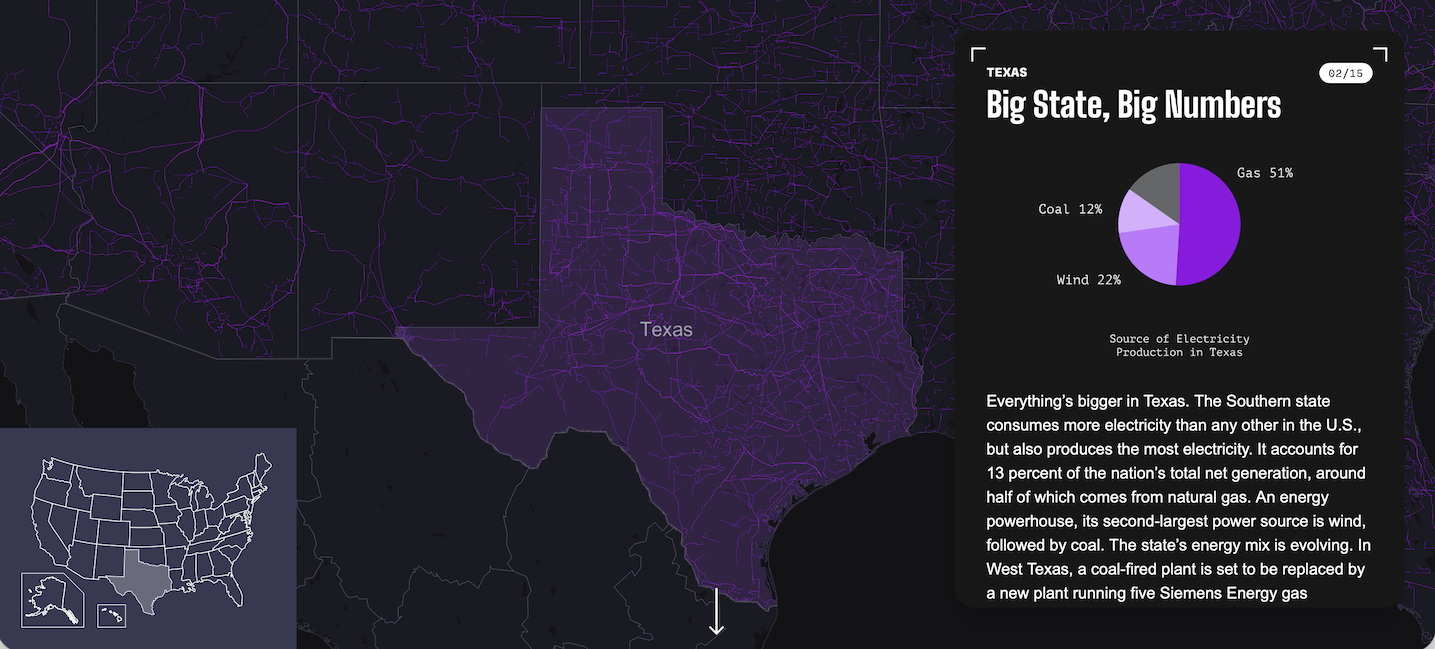
At the campaign core was an interactive map of the U.S. that allowed users to move through the energy system geographically, revealing how generation, transmission, infrastructure, and technology connect across regions. This framing turned a highly complex national system into something tangible and explorable, helping audiences see how individual components fit into a wider whole.
The experience was structured around clarity and progression. Rather than relying on long-form explanation, the content was broken into focused, modular sections combining data visualisation, illustration, and concise narrative. Each element was designed to reduce cognitive load while maintaining depth and credibility, guiding the audience through the “puzzle” of the energy system step by step.
A key element of the build was the use of Mapbox technology, adapted from The New York Times newsroom’s interactive storytelling capabilities, but licensed separately for this project. Our integration of this technology within a branded environment allowed for a level of interactivity and precision more commonly seen in editorial journalism, elevating both usability and engagement. (We also knew it would resonate with audiences, since they’re used to seeing this type of detailed coverage from journalists.)
Throughout the experience, Siemens Energy’s role was expressed through context rather than assertion appearing naturally and subtly within the system as users explored how energy flows, where infrastructure sits, and what enables reliability at scale.
The result was a content experience that made a complex system easier to understand without oversimplifying it, aligning closely with Siemens Energy’s positioning as a systems-level thinker in global energy infrastructure.
Media/Content Amplification Solution
By combining the authority of The New York Times with a strategic paid distribution strategy, the campaign embedded Siemens Energy within a high-trust publisher environment where policy and industry narratives are actively shaped. We thought smartly about alignments and context to enable performance as well as leveraging BrandMatch (our GenAI targeting tool) to identify high-relevance audiences and deliver targeting precision. This allowed the brand to move beyond visibility alone and so that their storytelling felt relevant within infrastructure, energy and business conversation happening across The New York Times.
The campaign combined a premium branded content experience, developed in collaboration with WPP Media, with targeted paid amplification across The New York Times’ ecosystem to reach an influential audience of policymakers, business leaders, and industry decision-makers.
At the centre of the campaign was the unique visual storytelling led within the Paid Post on NYTimes.com. The format was chosen for its ability to reach a highly engaged, high-value readership in a trusted editorial environment. This contextual targeting was critical in ensuring Siemens Energy was positioned within serious, informed discourse around infrastructure, energy transition, and economic resilience.
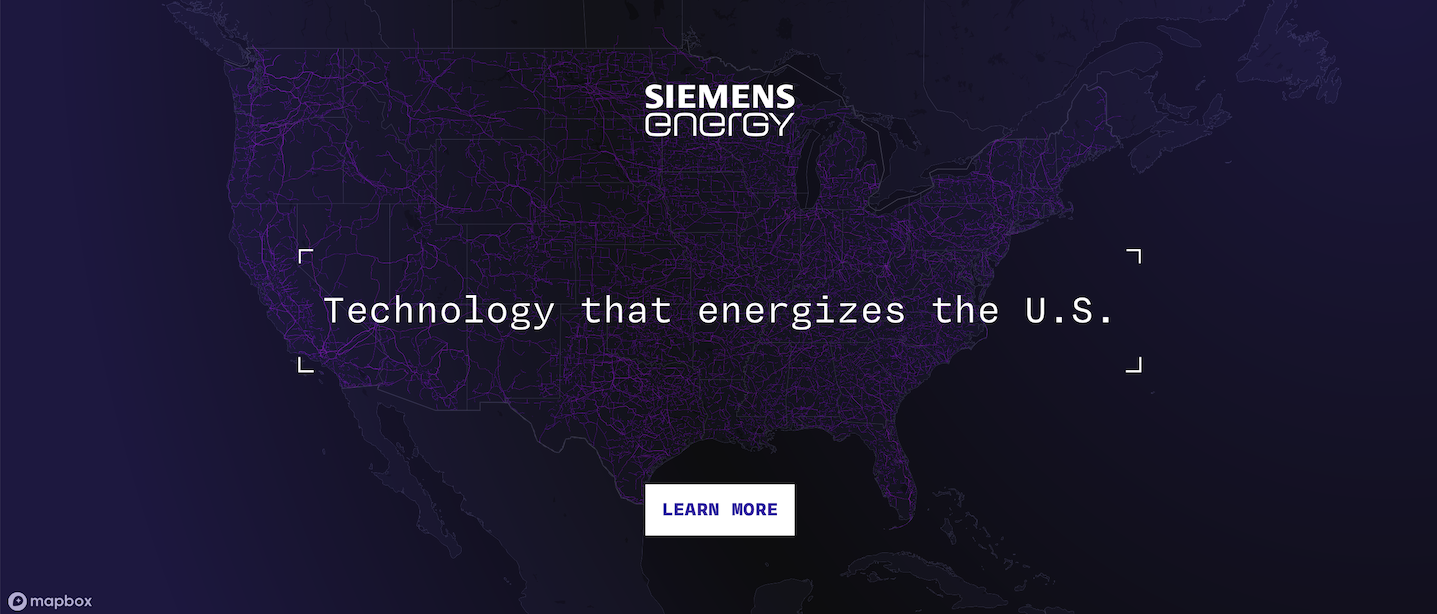
To extend reach, a supporting display strategy drove traffic into the experience through high-impact placements across NYT digital properties. These units acted as entry points into the interactive world, designed to spark curiosity through insight-led prompts grounded in real energy data and system-level questions.
Rather than focusing solely on awareness, the media strategy was designed to drive progression, moving audiences from initial curiosity into deeper engagement with the interactive experience. This ensured that exposure translated into meaningful time spent with the content, reinforcing understanding of Siemens Energy’s role within the broader system.
Results
The campaign delivered strong performance against its core objectives of building awareness, increasing engagement, and strengthening Siemens Energy’s visibility among an influential U.S. audience.
Unlocking the Grid generated more than 108,000 page views, making it the top-performing Energy category Paid Post across The New York Times global platforms. In a category typically challenged by complexity and lower engagement, this performance demonstrated strong audience appetite for a more accessible, system-led approach to energy storytelling.
Engagement quality was equally strong. Readers spent an average of 1 minute 17 seconds with the content, outperforming energy category benchmarks by 45%. This translated into more than 97 cumulative days of active attention, reflecting sustained interaction with a highly specialised audience.
The supporting display campaign delivered over 40 million impressions and achieved click-through rates nearly four times above benchmark, indicating strong resonance of the insight-led creative approach. Entry points rooted in energy data and system-level questions proved particularly effective in driving qualified traffic into the experience.
Beyond media performance, the campaign strengthened Siemens Energy’s position within the U.S. market by translating a complex infrastructure system into something clear, navigable, and meaningful. It improved understanding of the brand’s role in enabling energy systems at scale and reinforced its credibility among policymakers and industry leaders shaping the future of energy investment and infrastructure.